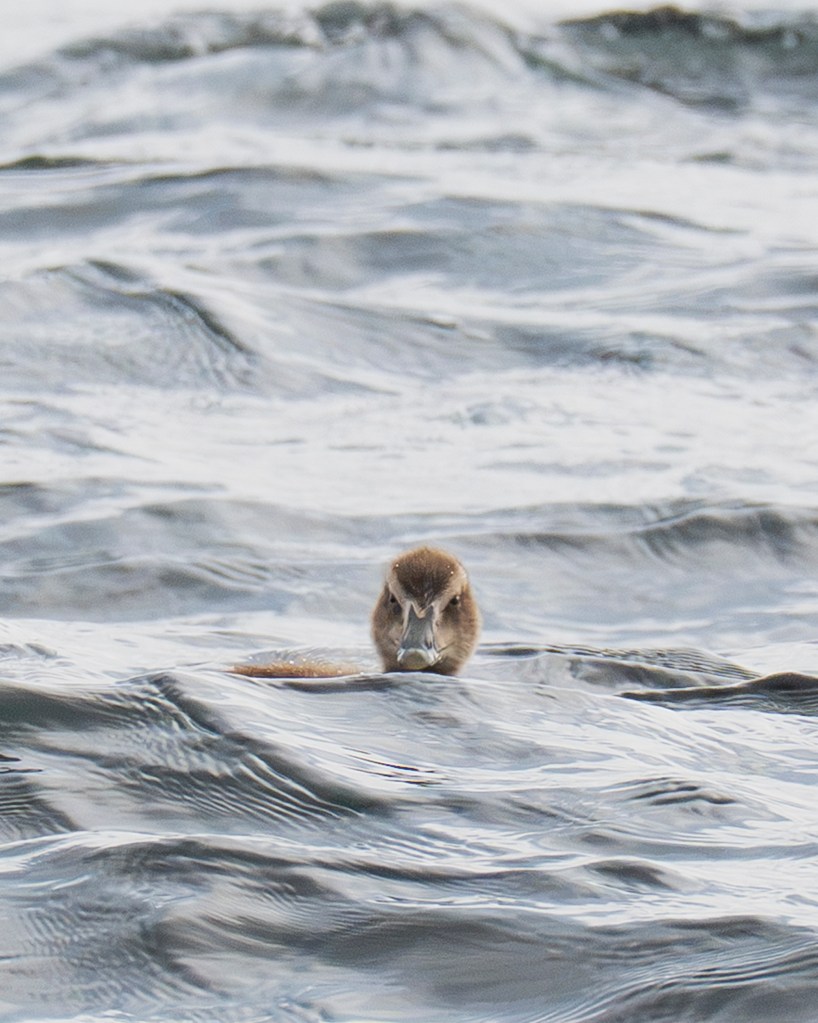
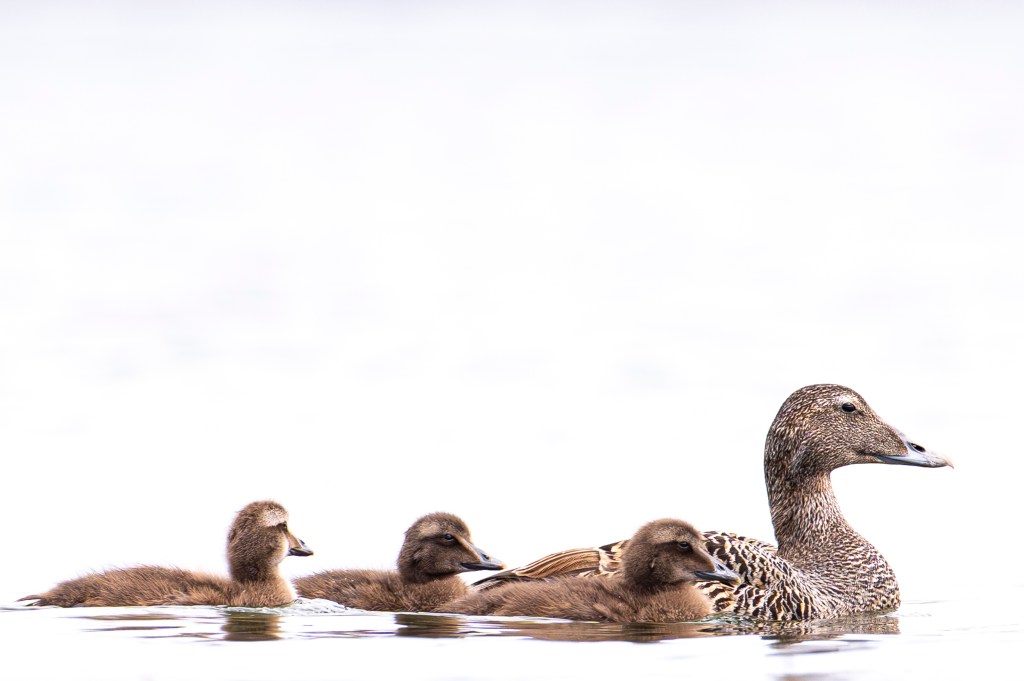
Photographed on North bay, on a bright and flat calm morning, this Eider and three of her five ducklings, were part of a larger crèche, a trio of mothers with a bakers dozen of youngsters in tow.
The crèches are formed to give protection against airborne predators, wandering bonxies and black-backed gulls. For adults and ducklings alike, there’s safety in numbers.
The local name for an Eider is a Dunter, from the old norse – to dunt, to bob up and down.
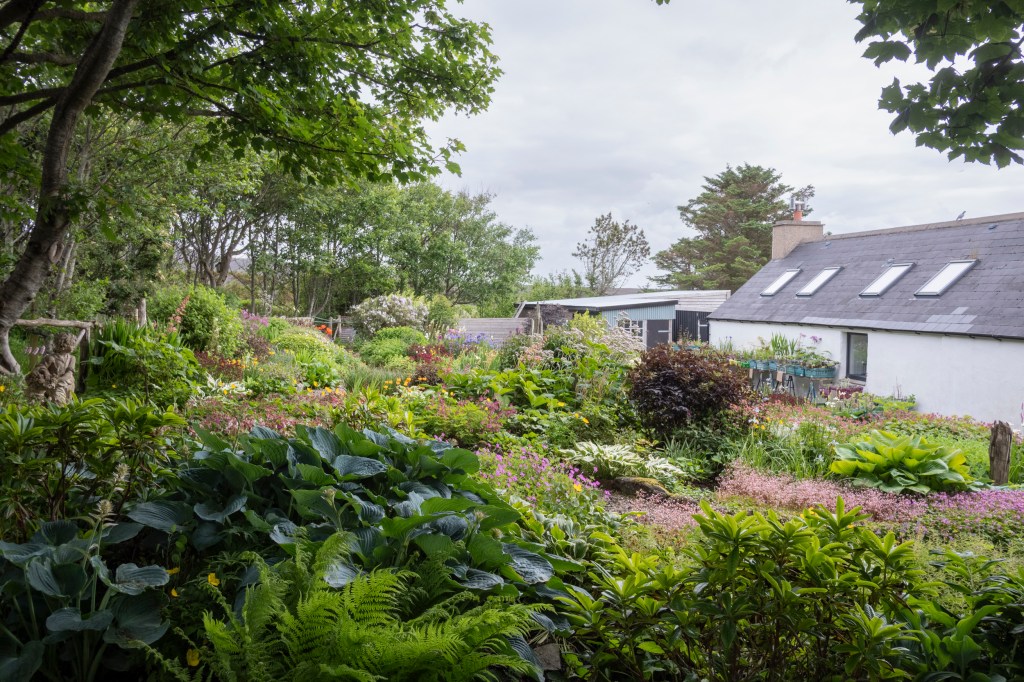
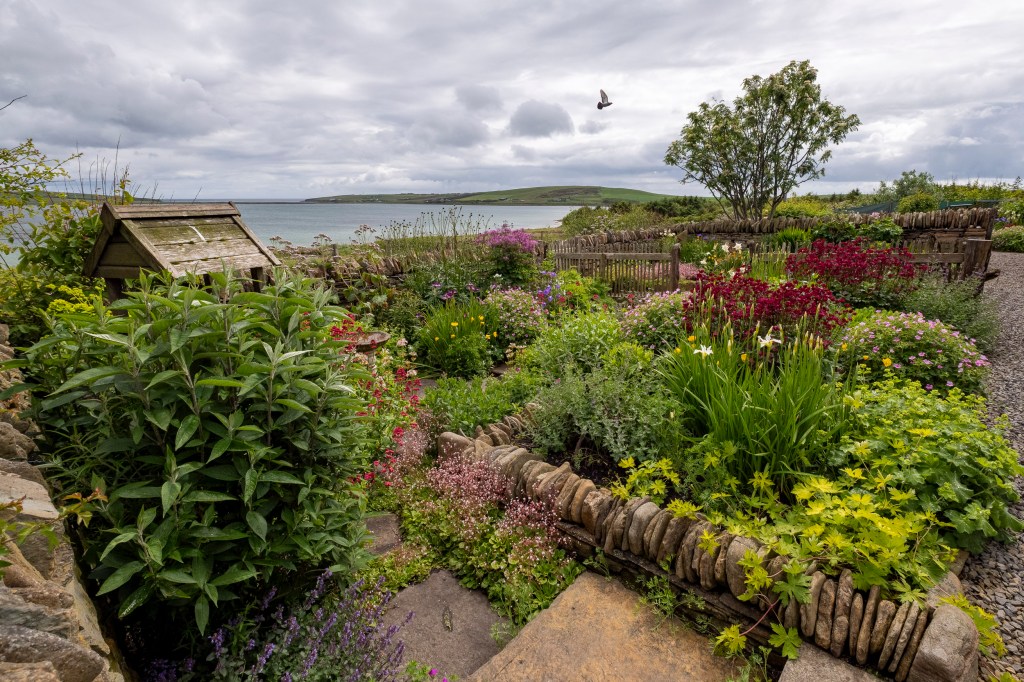
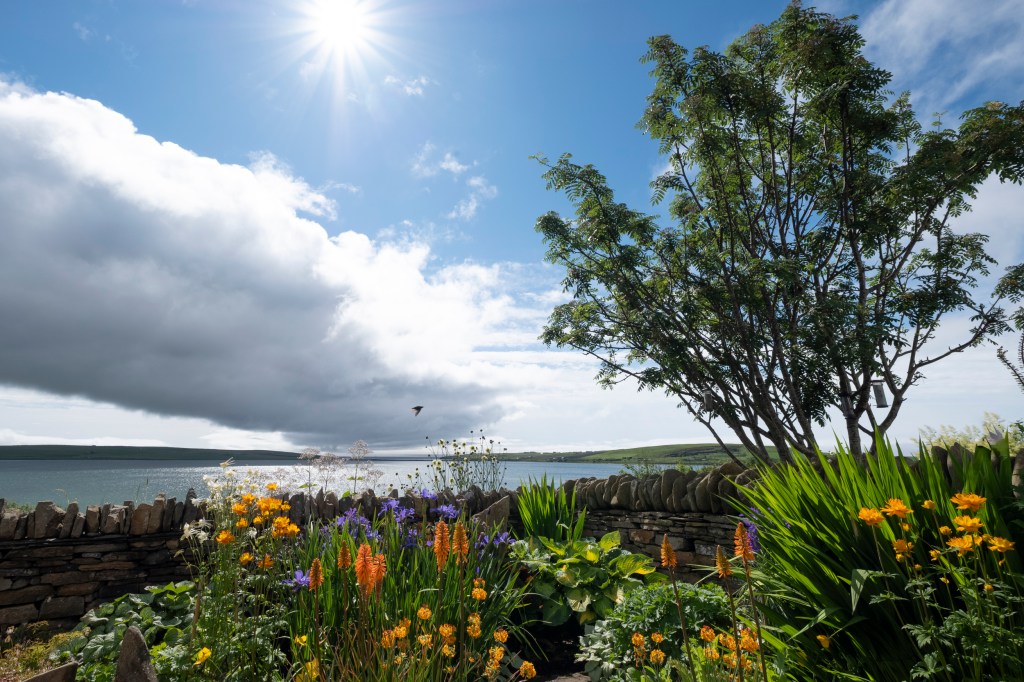
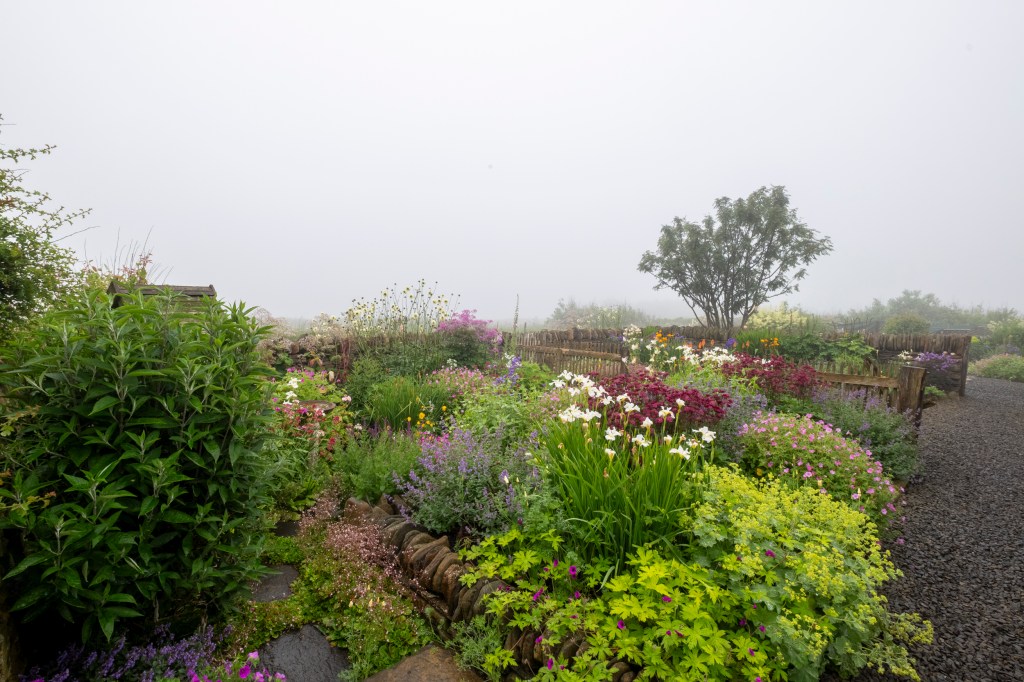
For gardeners, June in Orkney, has been pretty much perfect. We’ve had a steady warmth with both dry and wet days and thankfully, no curve ball gales. The past week was an amalgamation of the month, a mix of rain & sun and on Friday, just for good measure, a haar that shrunk the visible world to a few dozens of yards.
Sunshine and clearing rain clouds.Friday brought a haar.
The solstice was a little grey but bright. I had planned to get up early and photograph the Sun as it rose in the North-east, a last minute bedtime check of Sundays cloud cover forecast, brought a lay in instead.
Solstice morning @ sensible o/clock.
On the day of the solstice, we had a visit from a mainland gardening club. Thirty or so folk, many of whom had visited a couple of years back, when the garden in some places was still very much a work in progress. The pressure was on to show that we had actually made good on plans since their last visit. They reminded us, more than once, of what was new, sometimes you get so used to seeing the garden that you forget the changes that you’ve made. Jacqui held a plant sale that went down a storm, dozens of old favourites left for pastures new – we hope they thrive.
Waiting for visitors….
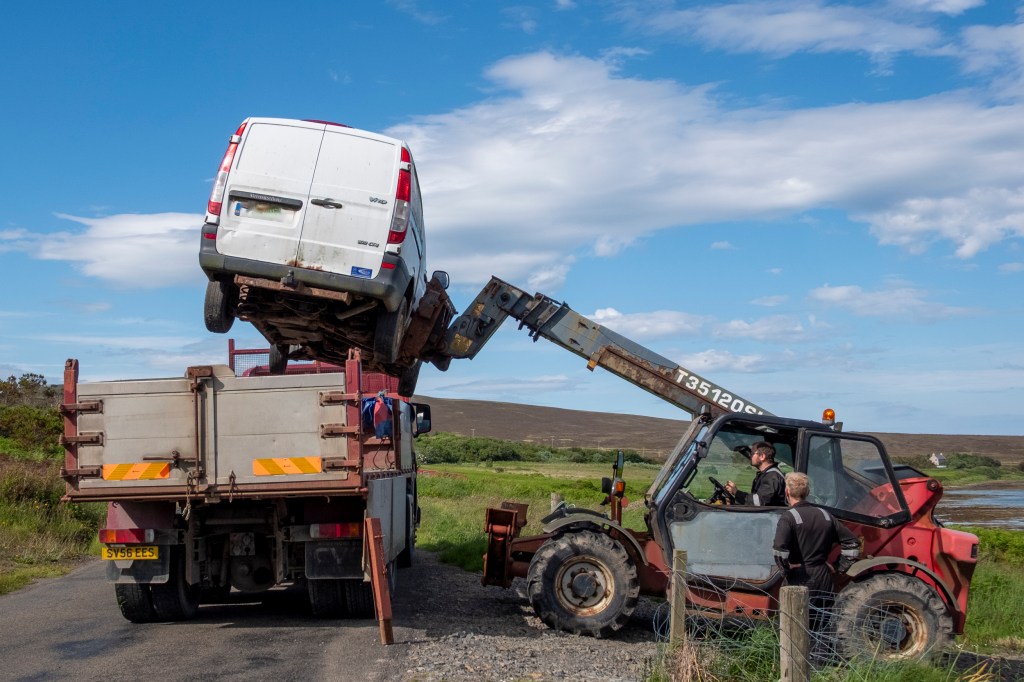
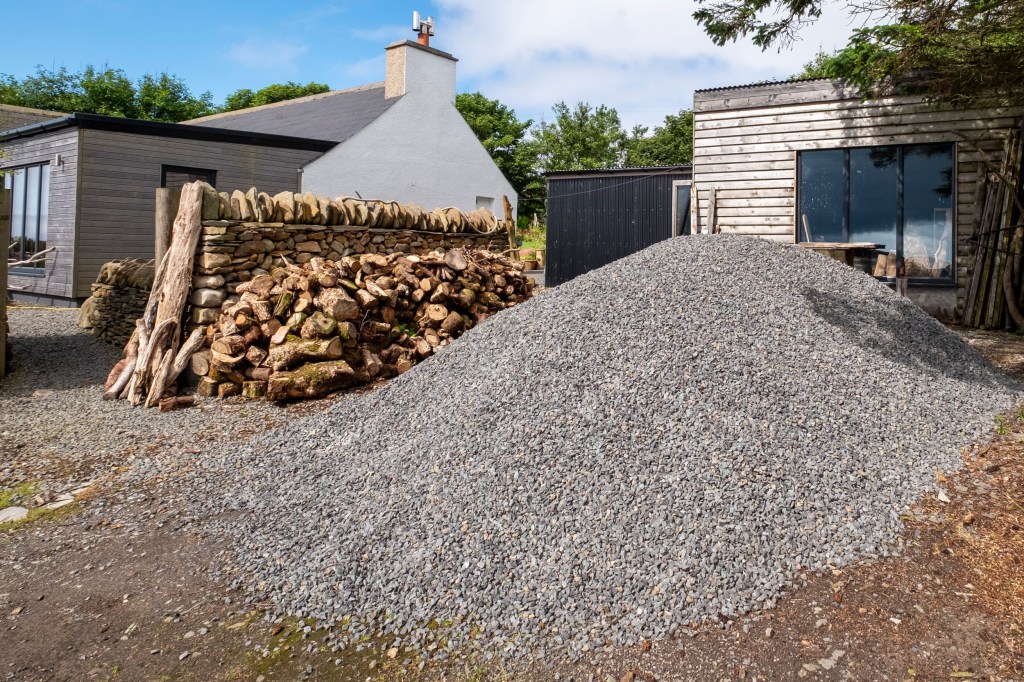
A job we never got around to was chipping where we park, as well as a parking spot it’s also a bit of a dumping ground, leftovers from house renovations together with “one day that will be useful” finds from the shore. The plan had been to tidy and chip it last month, then my van/shed on wheels died. It had been terminal for a while, 19 years old with moon and back mileage and more warning lights on the dash than Apollo 13. The final straw was a failed ignition, sooner or later sea air kills vehicle electrics. Transport costs are high here so we killed two birds with one stone, a loadall arrived, picked up the van and took it along the road. With the van out of the way next to arrive was a bulk load of chips from a *mainland quarry, to be dumped on the now clear drive, after which the van was loaded onto the tipper for its last journey to a mainland scrapyard. As the tipper drove into the distance I fought the urge to shed a tear and wave a hankie 🙂
*Mainland is the largest island in Orkney, home to Kirkwall and Stromness. In Orkney, the UK mainland is simply “South” or “Sooth”
Tomorrows tin cans.Just add a shovel…
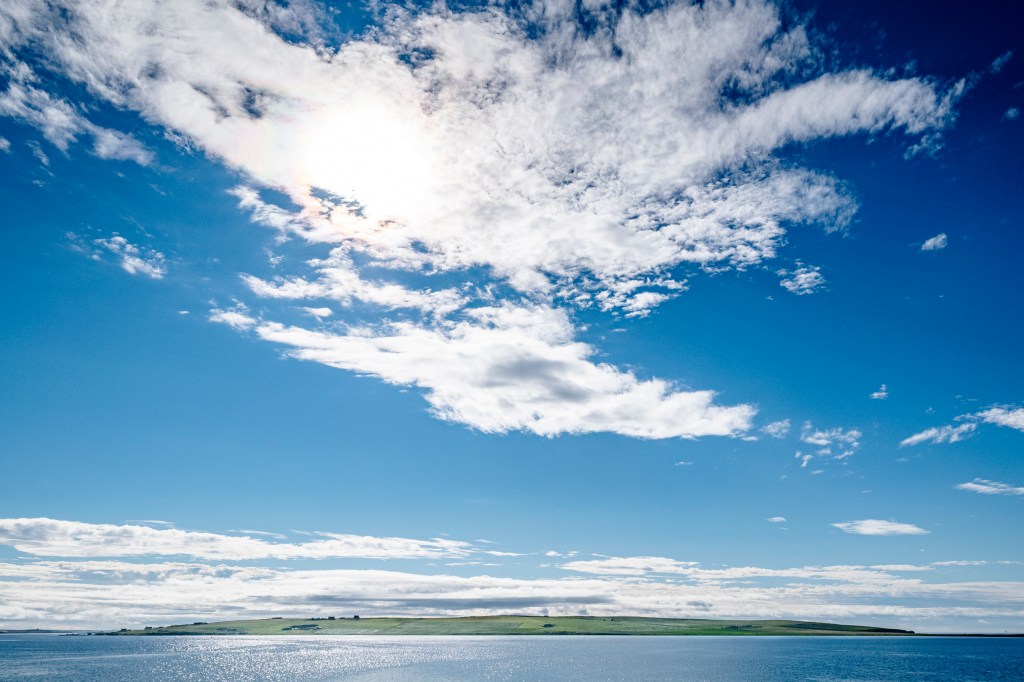
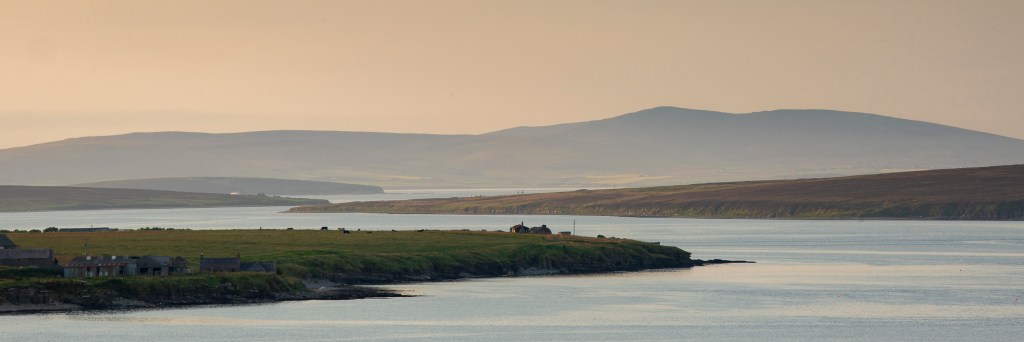
In the wider landscape, on a walk to Cantick head (pictured top of the page), that lies at the south-eastern tip of the linked island of South walls, seabirds were watched on the low cliffs that sit at the highest point of the headland. On Hoy, we live in a landscape dominated by heather moor, at Cantick, and indeed on South walls itself, it’s more pastoral, a greener island – old wet meadows and coastal heath. Like Hoy it’s mostly untouched by the plough or the mower. Only on the islands west facing side, the side that we see from home, where gently sloping ground is warmed by summers long days, is there a mixed landscape of both pasture and arable.
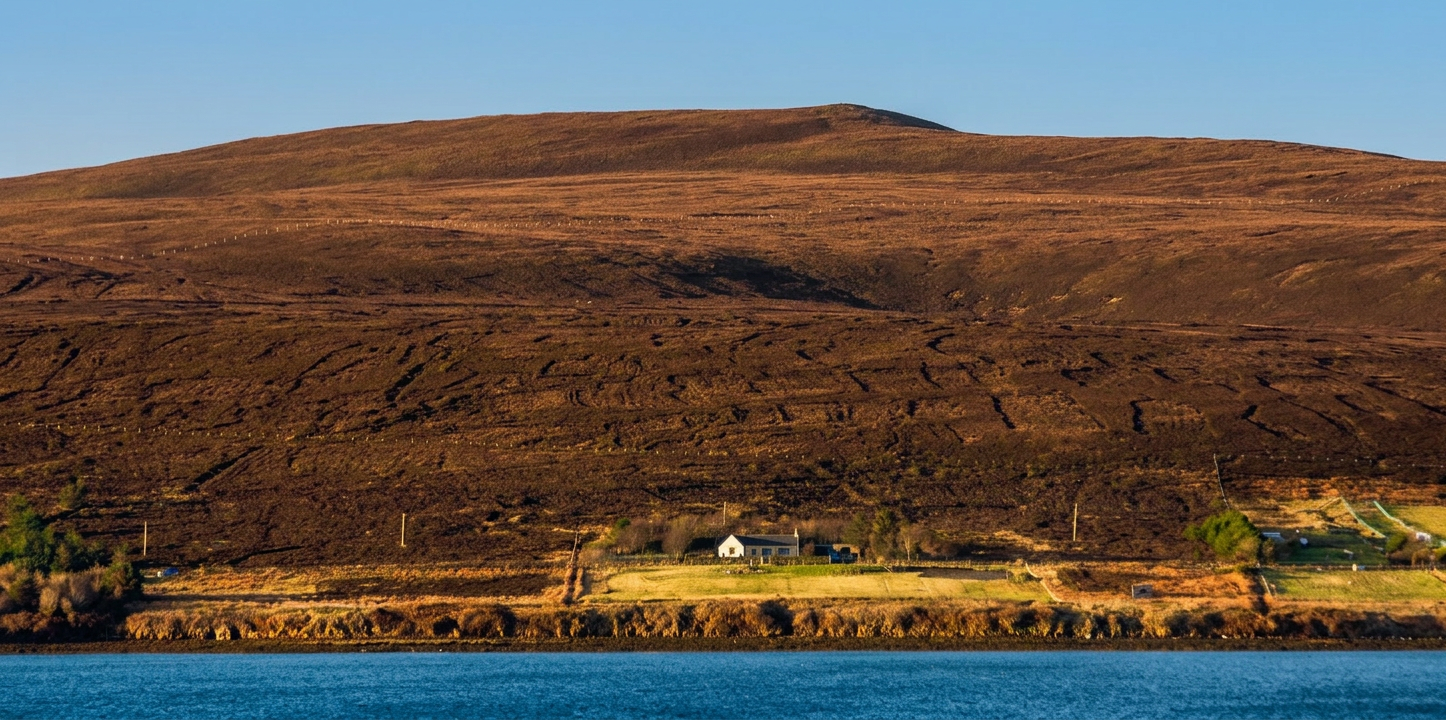
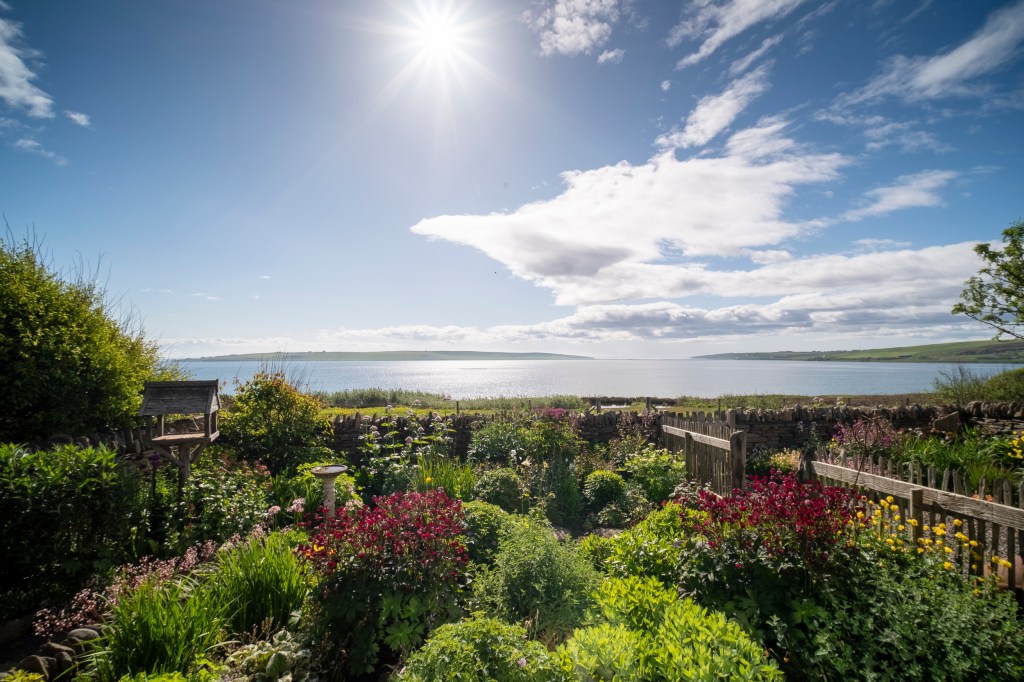
South walls from the front garden gate.
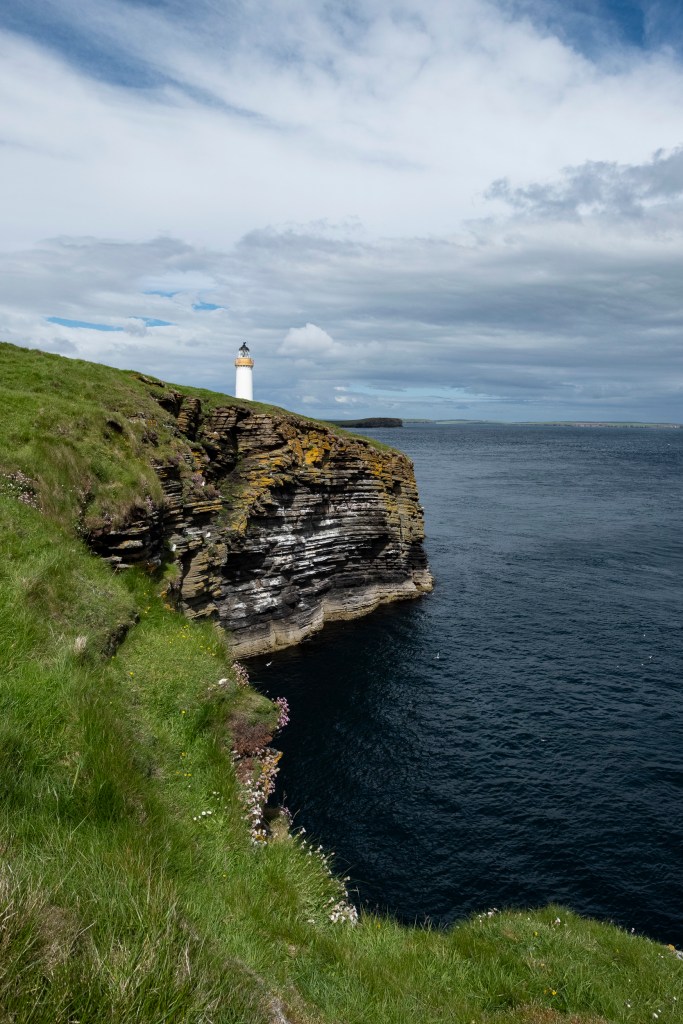
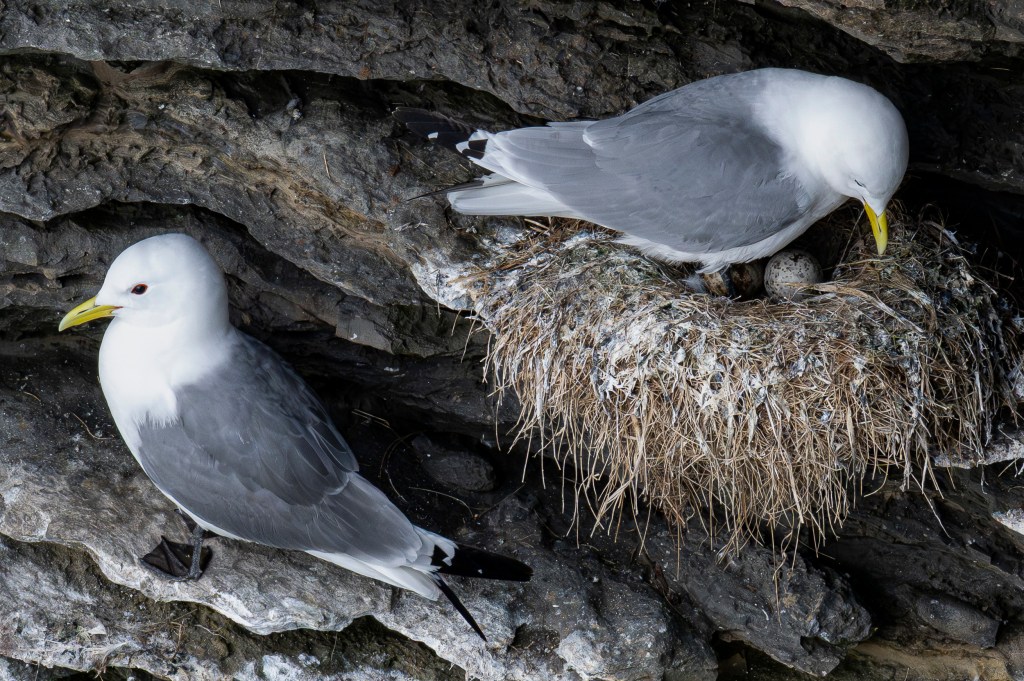
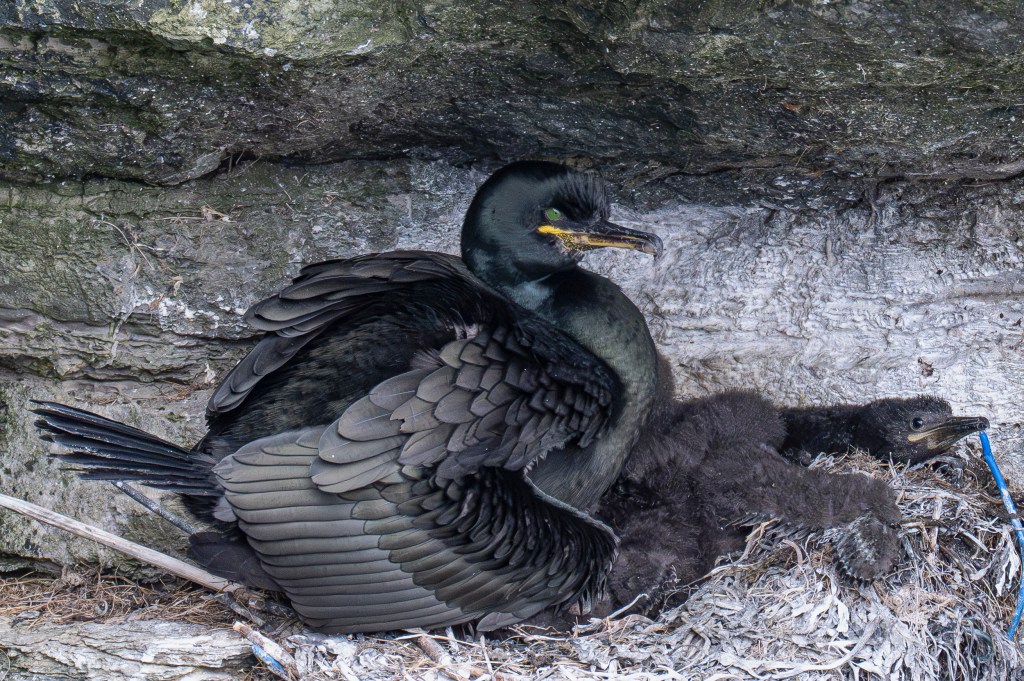
Despite the mere seven miles distance, I watched birds at Cantick that at home are a rare sight. Kittiwakes and European shags were nesting on the vertical faces of the cliffs, despite living a couple of stone throws from a bay, I’ve yet to see the former at home, the latter is seen now and then, always at a distance.
Kittiwakes.European (or common) Shag, she had two chicks, one was a little bit shy.
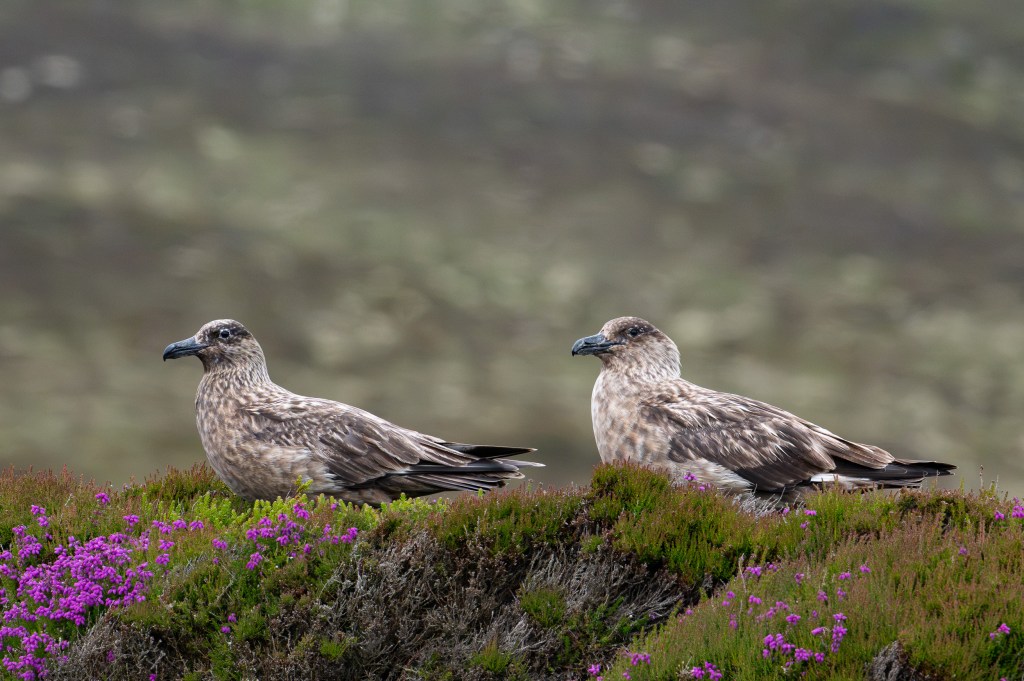
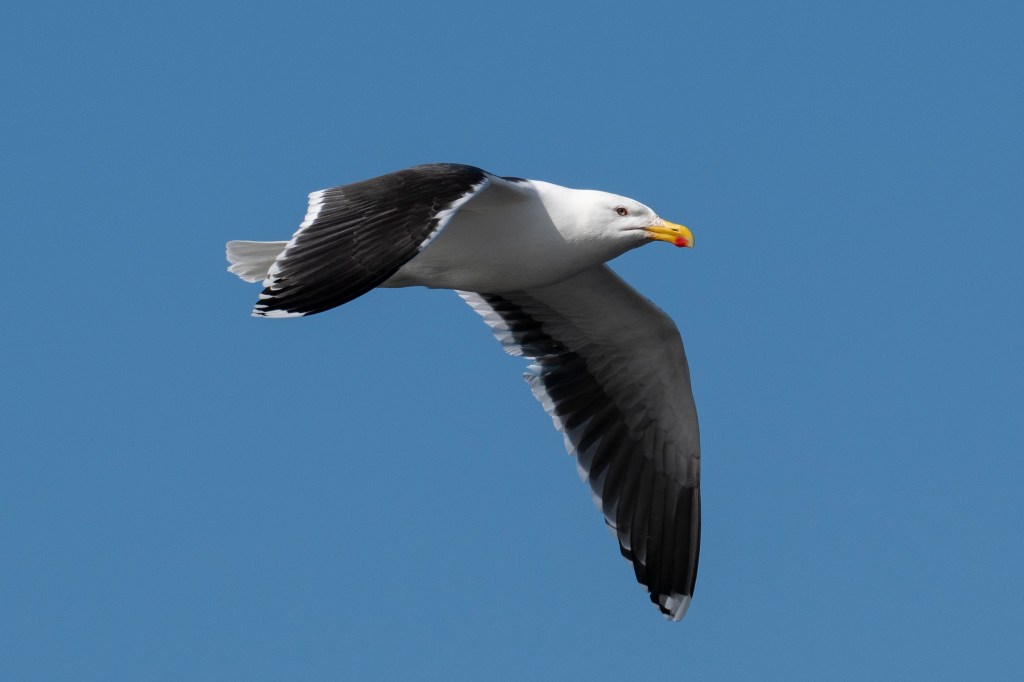
Where there are eggs and chicks you’ll also have egg and chick thieves. Great black-backed gulls were constantly on patrol, thickset birds, riding the thermals on broad wings. On a permanent lookout for an easy meal.
Great black-backed gull.
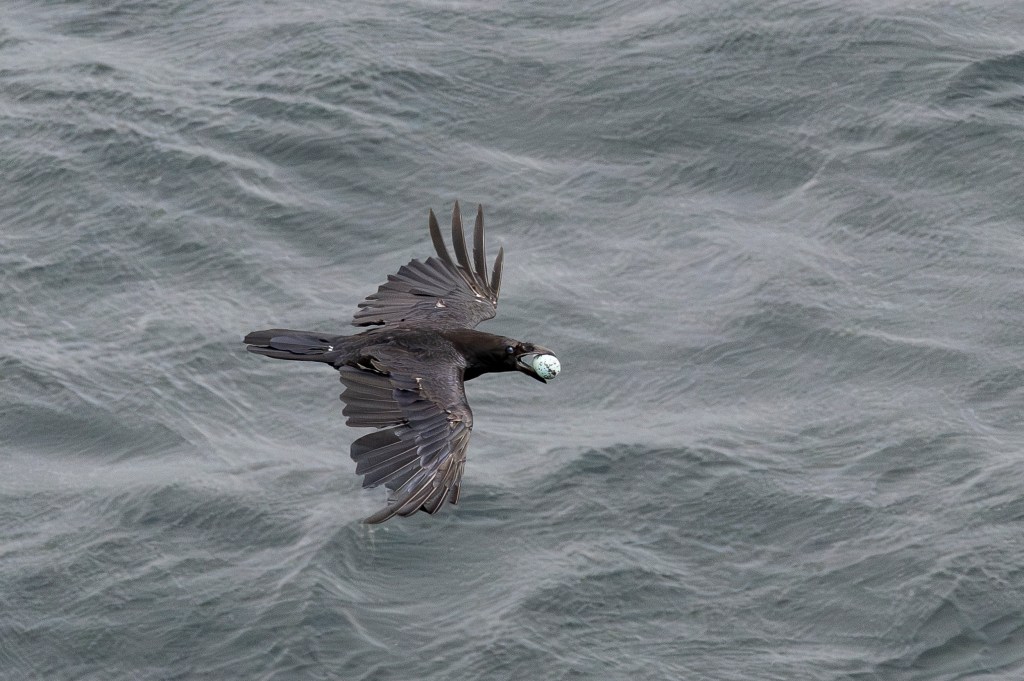
A partner in crime Raven, whose tatty feathers showed that he or she was ready for an autumn moult, sneaked away below the cliffs. A guillemots egg held firmly in its beak.
Egg thief.
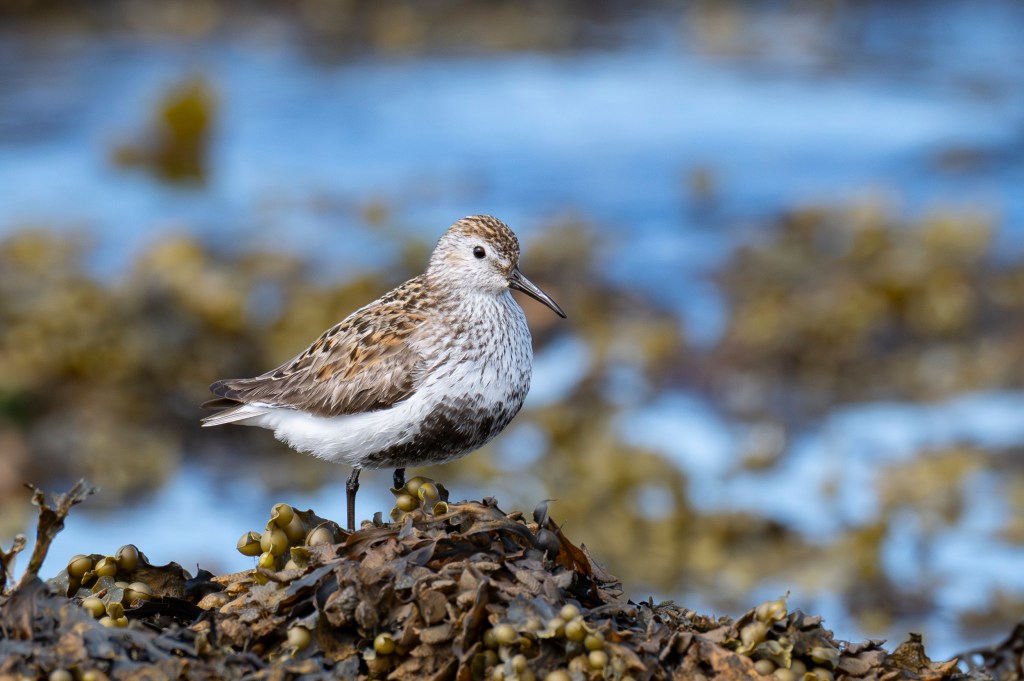
I walked home along the opposite shore of the headland, in contrast to the cliffs it’s an area of low lying shingle that skirts the bay of Osmundwall, shallow and sheltered – it was once a home to Viking fleets. Dunlin were feeding amongst the bladderwrack, they’re a small Starling sized bird that also has the name of the “plovers page”, given for their habit of mixing in with wintering flocks of Golden plover.
Dunlin, in Summer plumage.
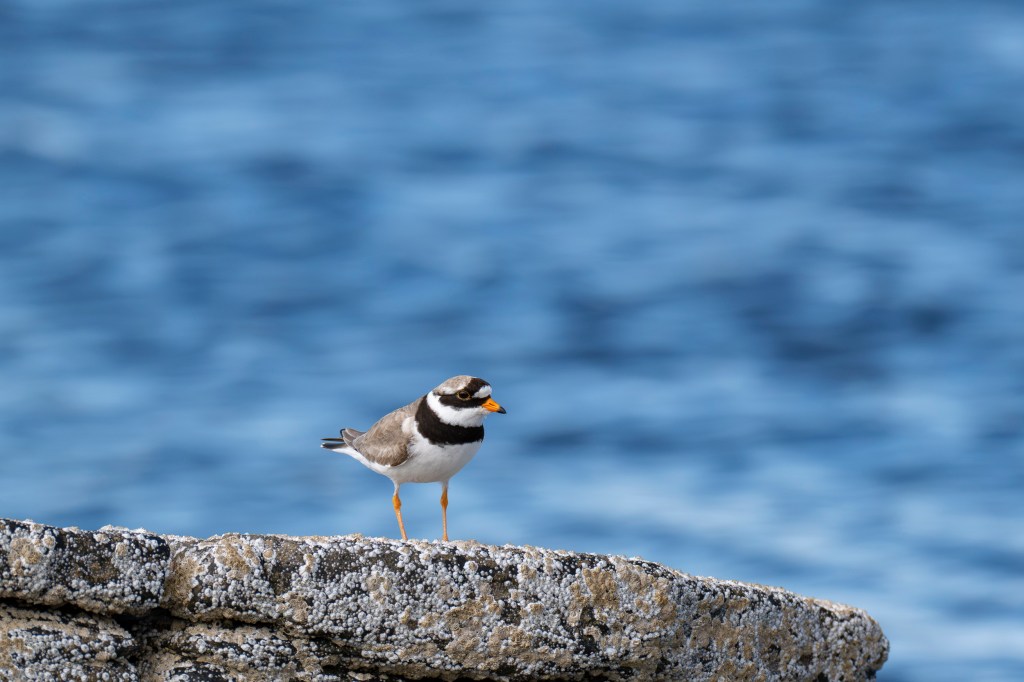
There were no Golden plovers that day but Ringed plovers were in abundance, they nest on the shingle and, as I walked along a track that services the lighthouse, they constantly pleeped warnings to hidden chicks.
Ringed plover.
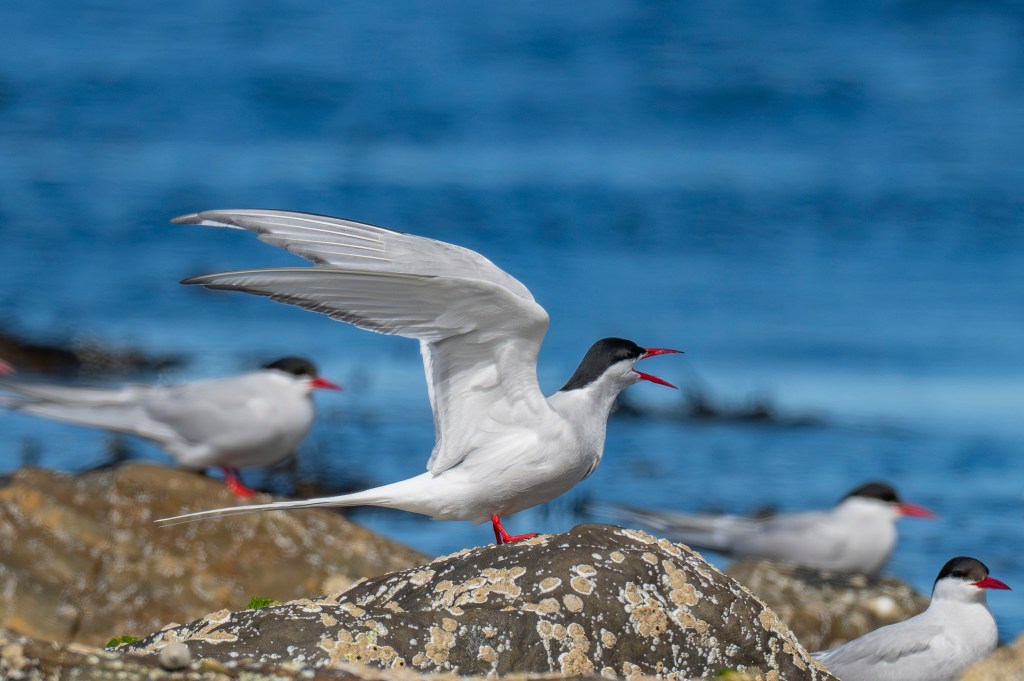
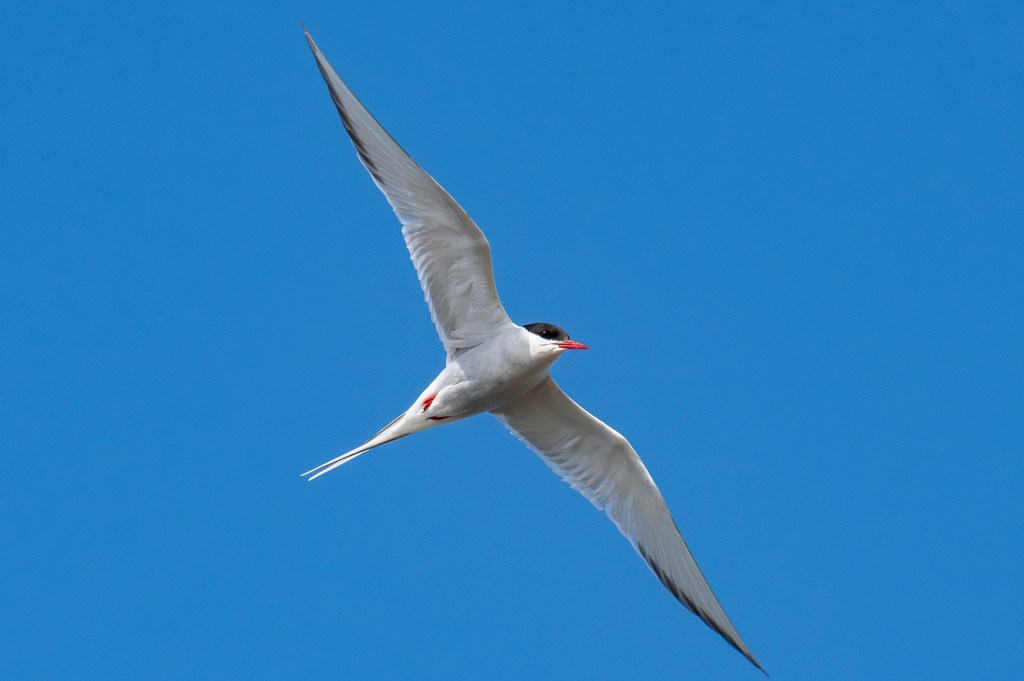
As the plovers pleeped from the shore, another species scolded me from the air, the Arctic tern. A bird that every year migrates from european and arctic breeding grounds to the antarctic, a round trip, depending on the start point, of between 45000 and 59000 miles, all from a bird that weighs in at around 110 grams. Unlike the plovers they weren’t ticking me off for being close to their nests, their colony was a good half mile away. It’s close to the house of friends, who every summer have to run a gauntlet to collect their post from the end of the track that leads to their home. Dive bombing terns, with their sharp red beaks, have more than once drawn blood from unprotected scalps and foreheads. In my case they were just terns being terns, nests or no nests they seem to be wired to be permanently waspy, breaking off from their route home just to squawk at me for the sake of it.
Arctic terns.
Their latin name is Sterna paradisaea, the Swallow of Paradise. The first part of the name comes from their flight pattern, quick and Swallow like, the second from their long tail streamers, thought by the 18th century Danish zoologist who named them, to be similar to the plumage of a Bird of Paradise.
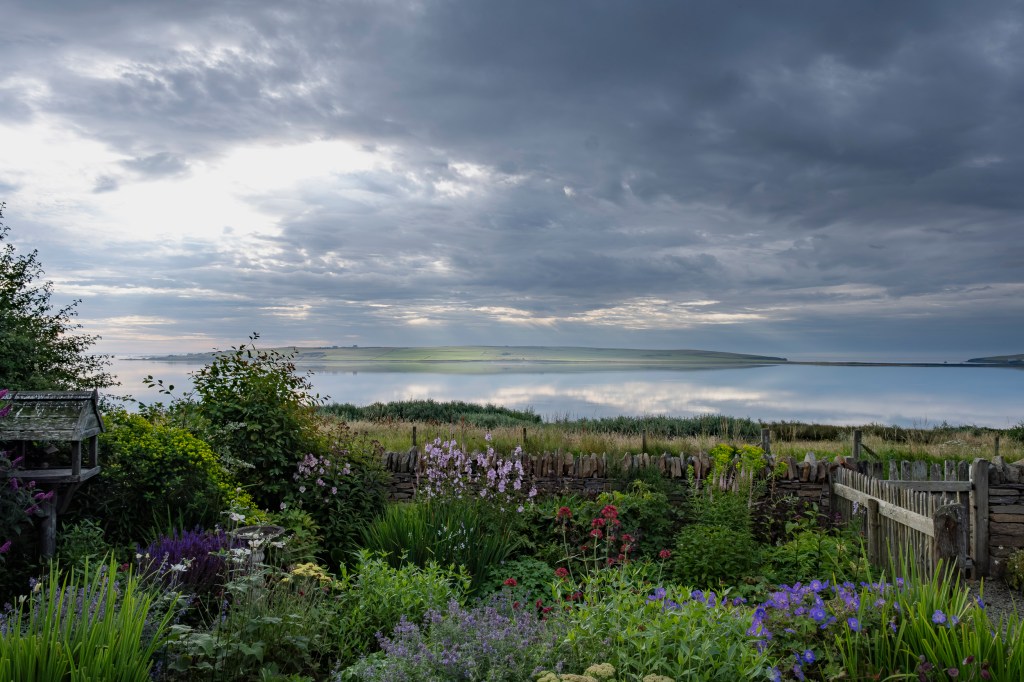
The past couple of weeks have brought a mix of days, some gave bursts of heavy stair-rod rain and others gifted bright and cloudless skies. Today it’s grey and flat calm, barely a ripple on the bay.
The one common denominator has been warmth, add in the spells of rain plus our current nineteen hours of daylight and the result is perfect growing weather. Jacqui is on a “painting the Forth Bridge” task, working her way through the garden, secateurs and string in hand for cutting back and tying in wayward perennials, at her feet a trug that in no time at all fills with weed seedlings. It seems in Orkney at least, this is a weed, and a snail, year. The snails get off lightly, collected up and thrown into the meadow, ditto the finger length black slugs that seem to lurk under every plant pot.
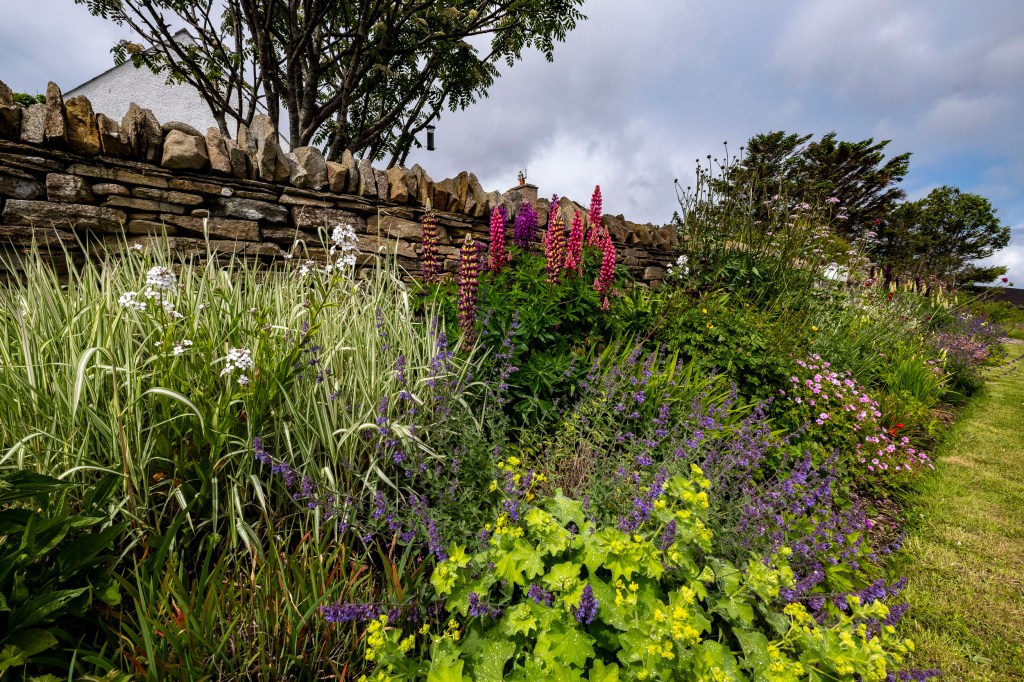
In the past I’ve mentioned the guerrilla garden, a vaguely deeded no-mans land strip of roadside verge that is part ours, part county councils. A home for spare plants and cuttings that has almost become an extension of the garden. A long narrow border that runs the length of the front garden stone dykes. It has had a narrow escape, the island is getting fibre broadband, a replacement for the aged copper wire that an engineer once cheerfully told me was about as useful as ‘wet string’. Fortunately the diggers laying the pipes for the cable went along the other side of the road, had they not, there would have been frantic days of lifting and subsequent replanting.
A lucky escape…
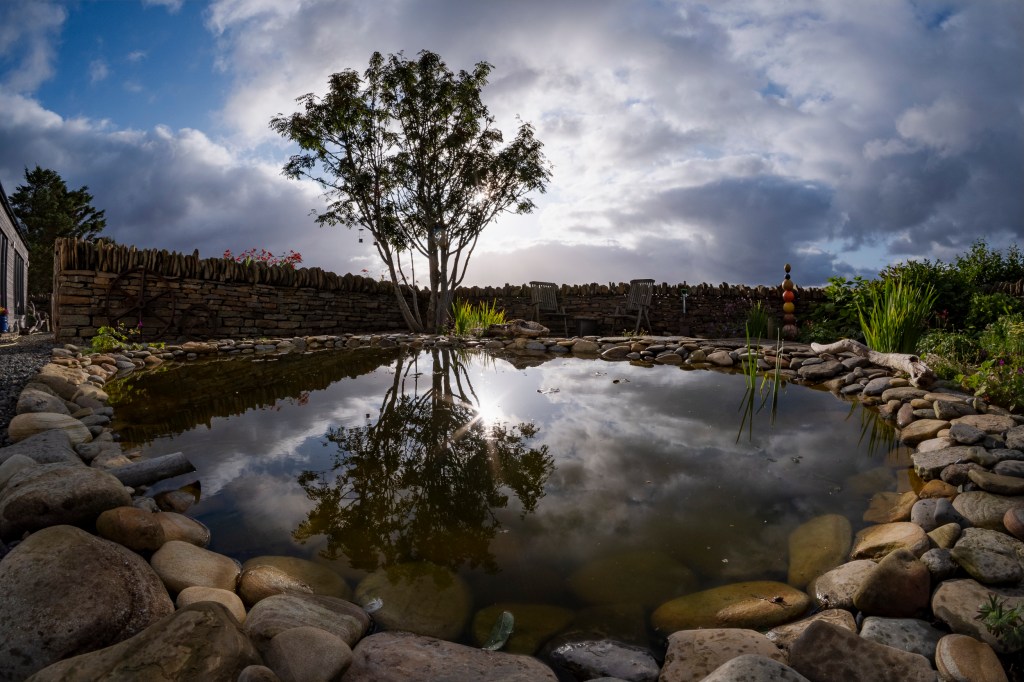
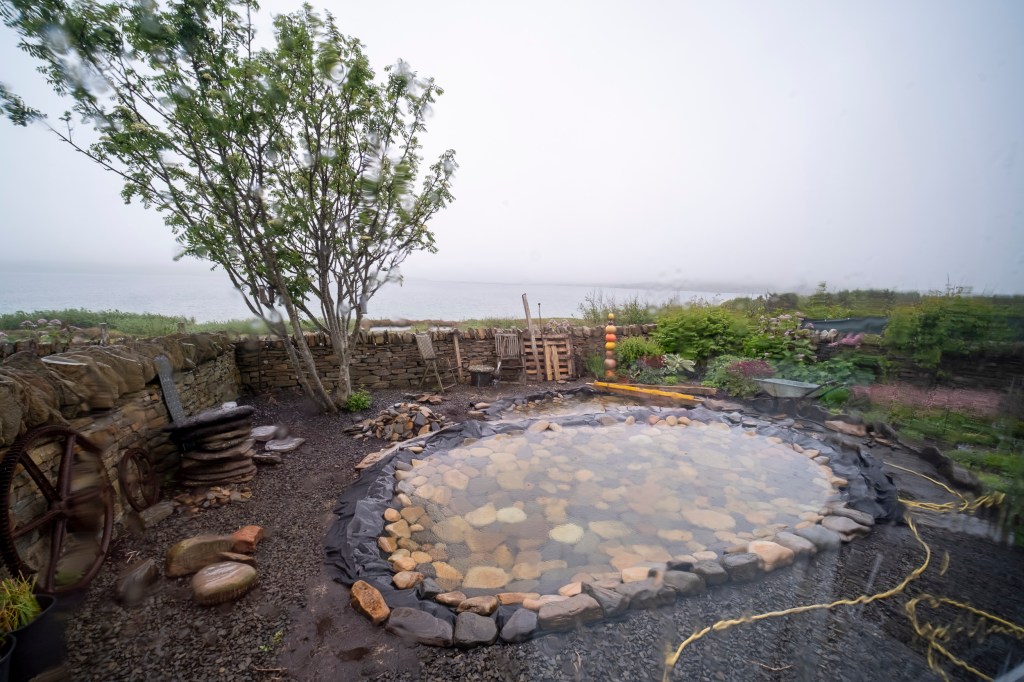
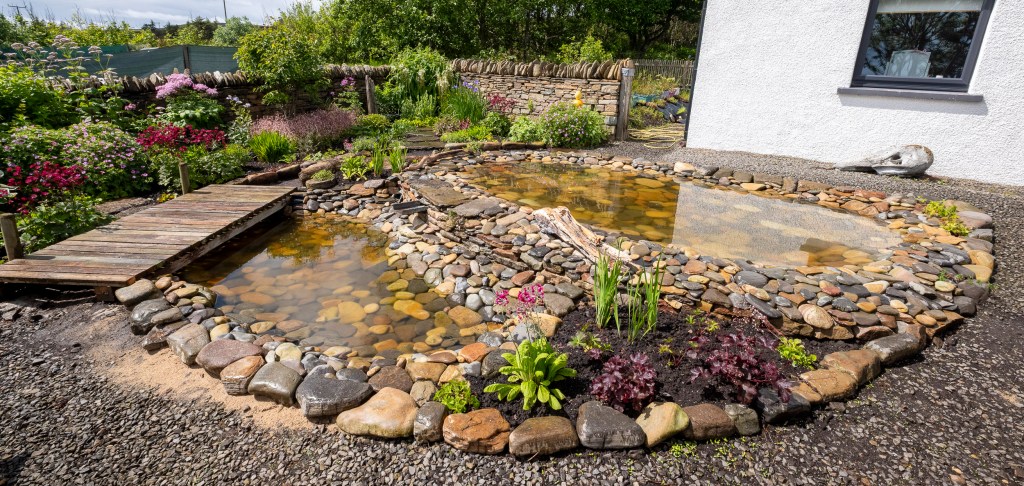
An on and off project for the past few weeks has been the digging of a new pond. When we started a garden here it was as much for wildlife as it was for humans, and the one thing that was always missed, was a pond. Three were dug in the meadow and they’ve proved to be a magnet for wildlife but the meadow was easy, ask kevin, the owner driver of an excavator working along the way, to trundle his machine across and a few hours later you have ponds. In the garden it’s more awkward, there’s shallow soil atop sandstone and a sloping site to contend with, both of which always put us off. In the end we girded our loins, gave up a front garden bed and dug two ponds, the soil as expected was shallow, in places barely a foot down before you hit solid stone. To cope with the slope the lowest side of the bigger pond was raised up with dug out spoil. Both were too shallow to backfill with soil, so each has been lined with sea-smoothed flat stones from the shore. A system is in place to fill them with rainwater from the house roof.
Early days- rain stops play
A pump has been added and a blade waterfall was priced up, two to three hundred pounds depending if copper or corten steel – Ow Much!! I bought one made of thick ABS plastic – twenty quid, and covered the visible bits with a piece copper picked up from a farm dump. Apart from the copper, which is nicely aged 🙂, it’s all a bit new at the moment but time and planting will take off the shininess. A few evenings ago a Frog was spotted sitting on a cobble, entering the water with a plop when I got too close, that single moment made it worth the effort.
Nearly there.
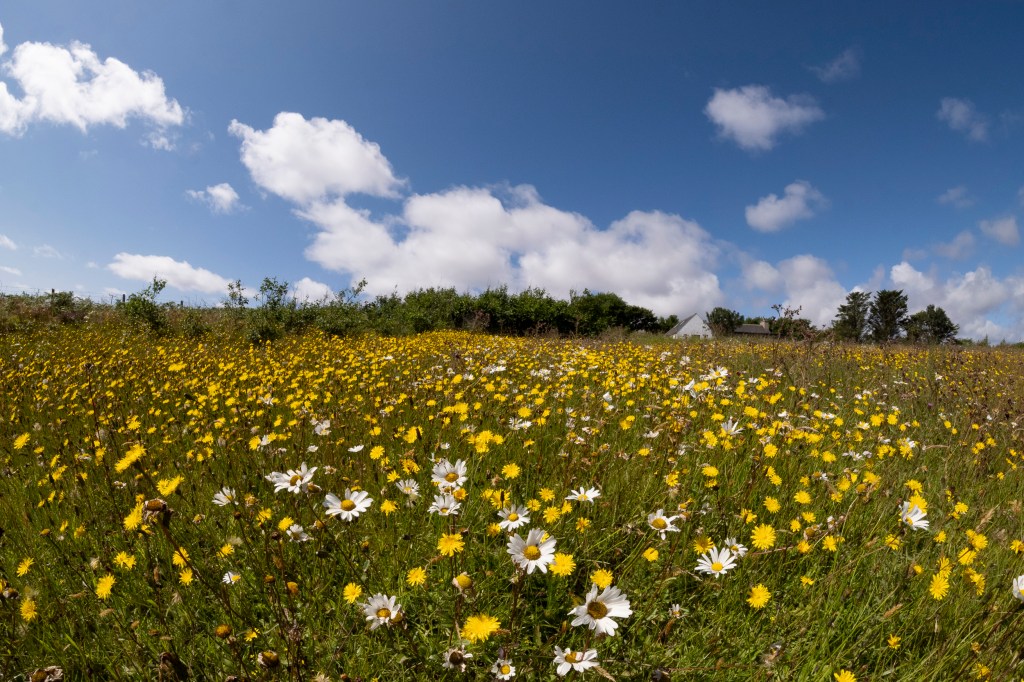
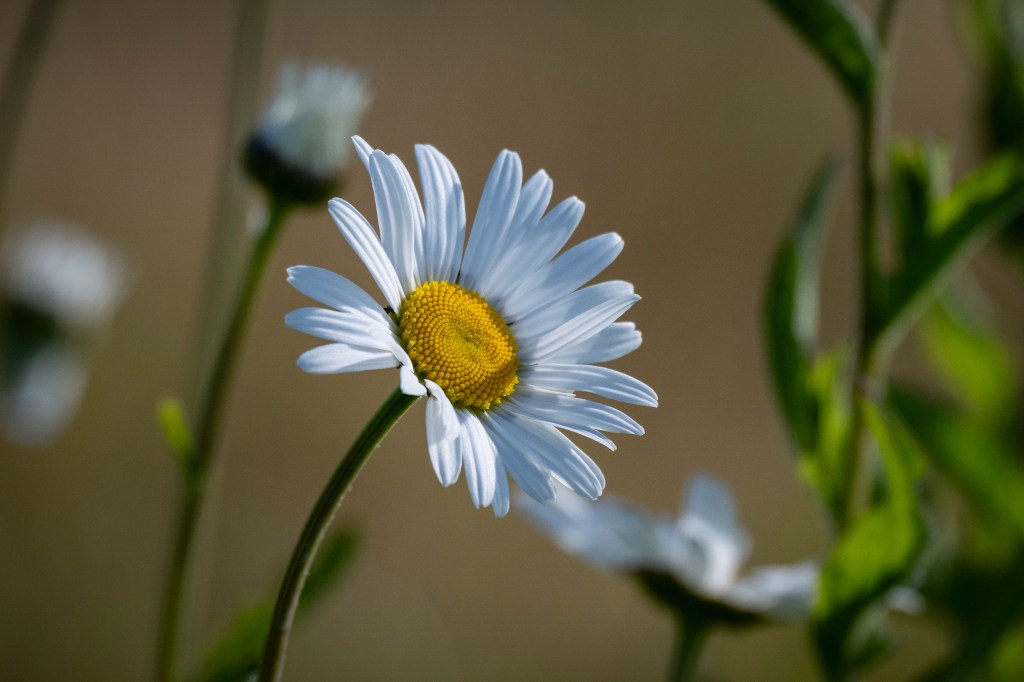
In the meadow it feels like mother nature is holding her breath, so many plants are on the cusp of flowering, we’re still waiting for the day, when suddenly one morning, you look across and there’s a sea of flower heads, nodding to the beat of the wind. There are a few early starters, damp loving ragged robin and water avens are open, in drier spots the first ox-eyes are unfurling, turning bright yellow faces to the sun.
Ox-eye daisy
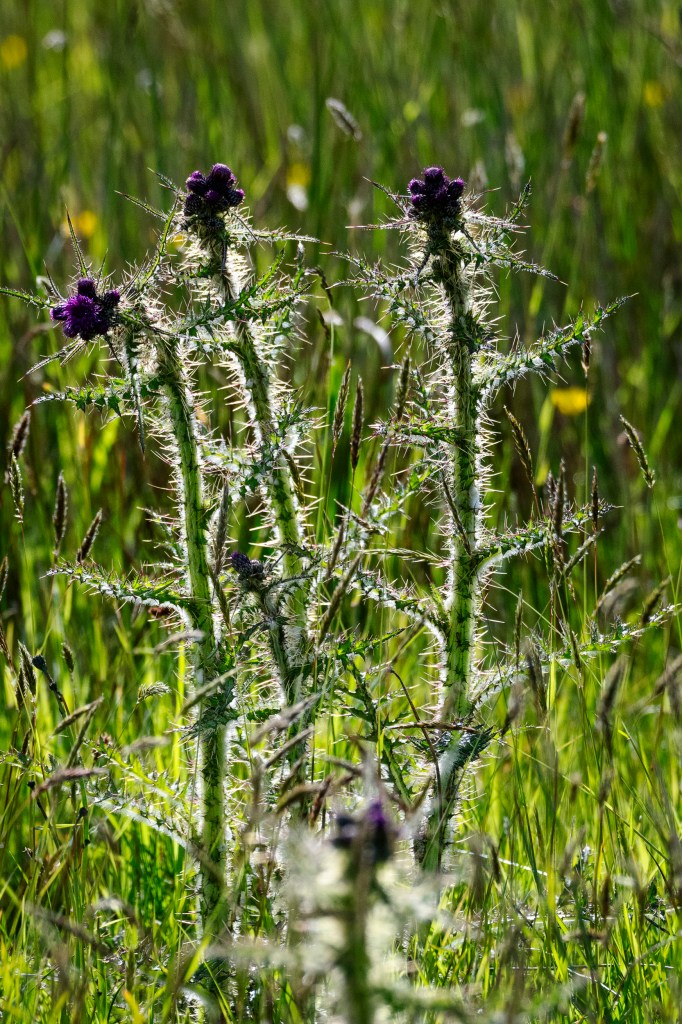
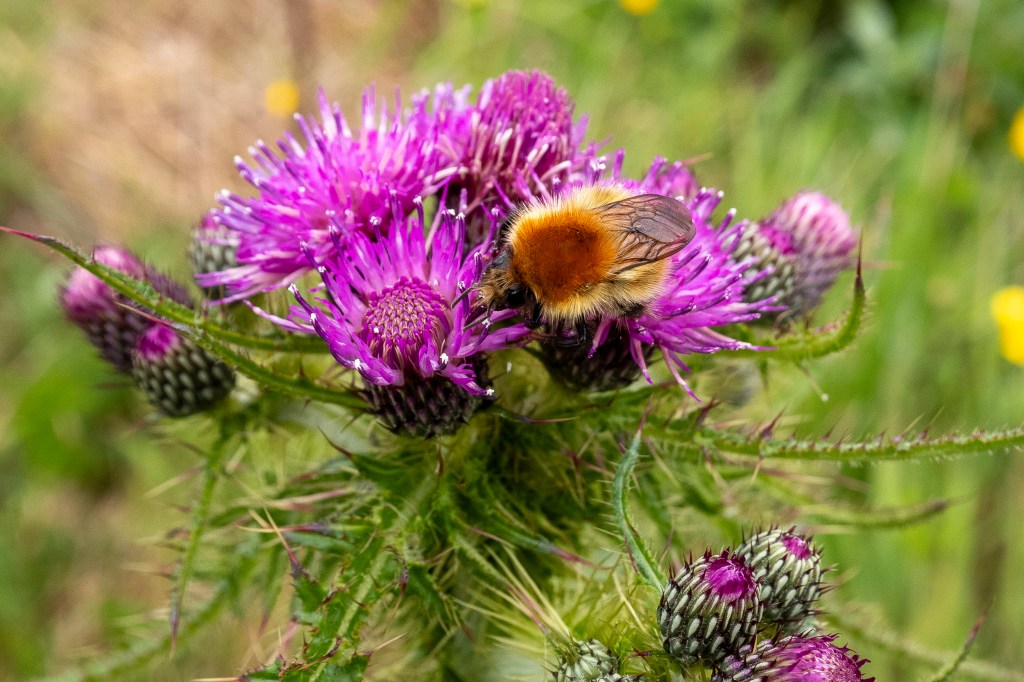
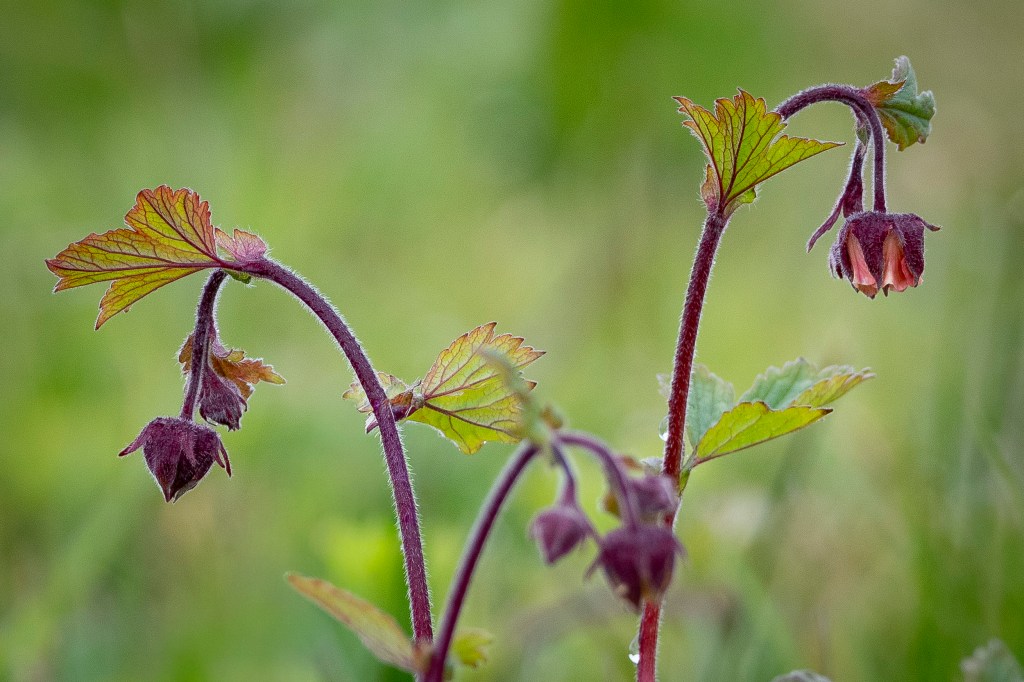
Wickedly spiked marsh thistles (pictured top) are also bursting open, capping their urn-like flower buds with starbursts of vivid pink. They’re a mixed blessing, great for bees and pollinators but very invasive. The only upside of their invasiveness is that for the first year they form a floret, flowering only in the second year. It’s an easy enough task, to slow their plans of field, if not world domination, to wander round now and then with an aptly named thistle spear, cutting the florets root at its base.
Marsh thistle & common carder bumblebee
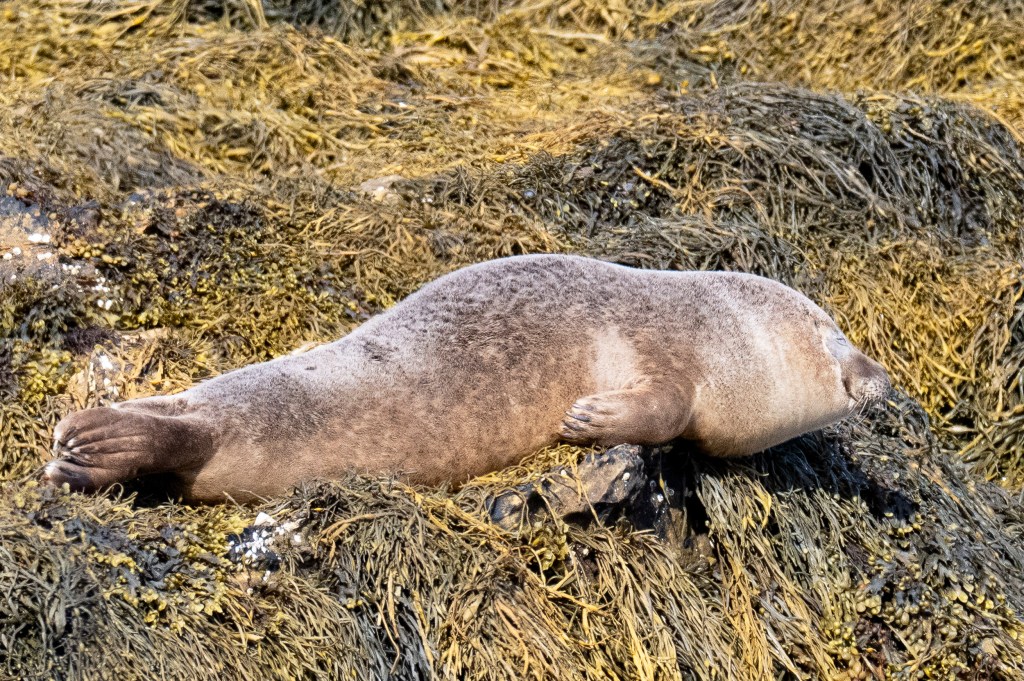
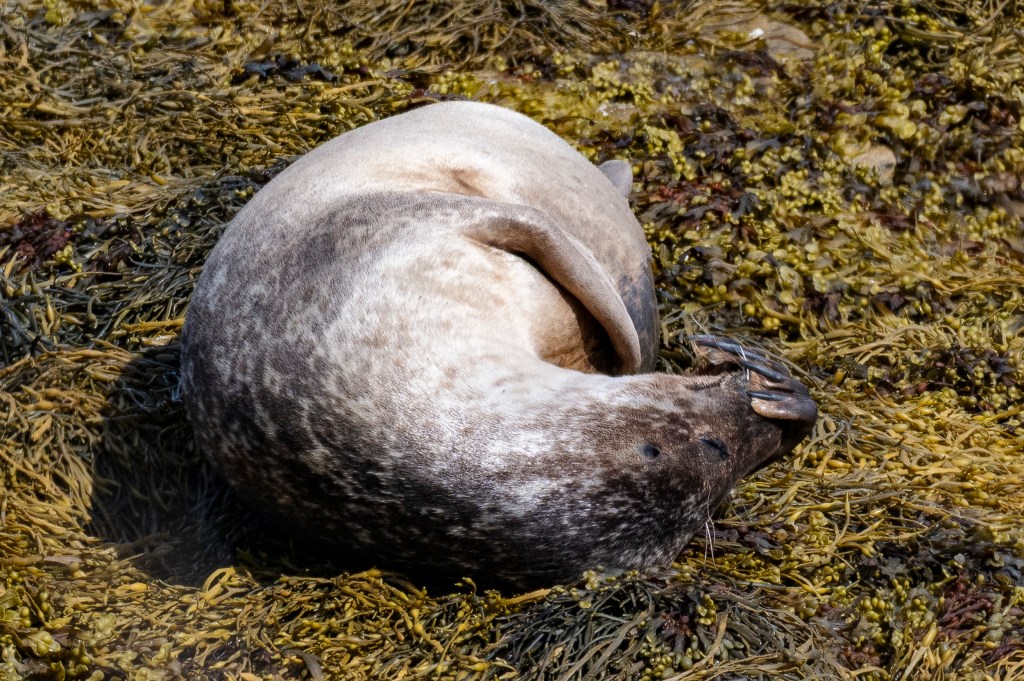
Below the meadow harbour seals are giving birth, we tend to leave them be, avoiding disturbing both pups and mothers for a few weeks, but can’t resist a quiet peek now and then. Hot days at low tide are best, when all, young and old, snooze the day away on a thin mattress of bladderwrack.
The last days of May brought fine and settled weather. Days of blue skies and light winds. We spent long spells in the garden, Jacqui catching up with weeding and boxing up plants for customers on mainland while I got on with a new project, replacing a front garden bed with a cobble lined pond. We never get the heat that other parts of the UK sometimes have to endure but even with an ever present breeze off the sea, it was T-shirt weather, warm enough to cast a clout*.
Sunny days
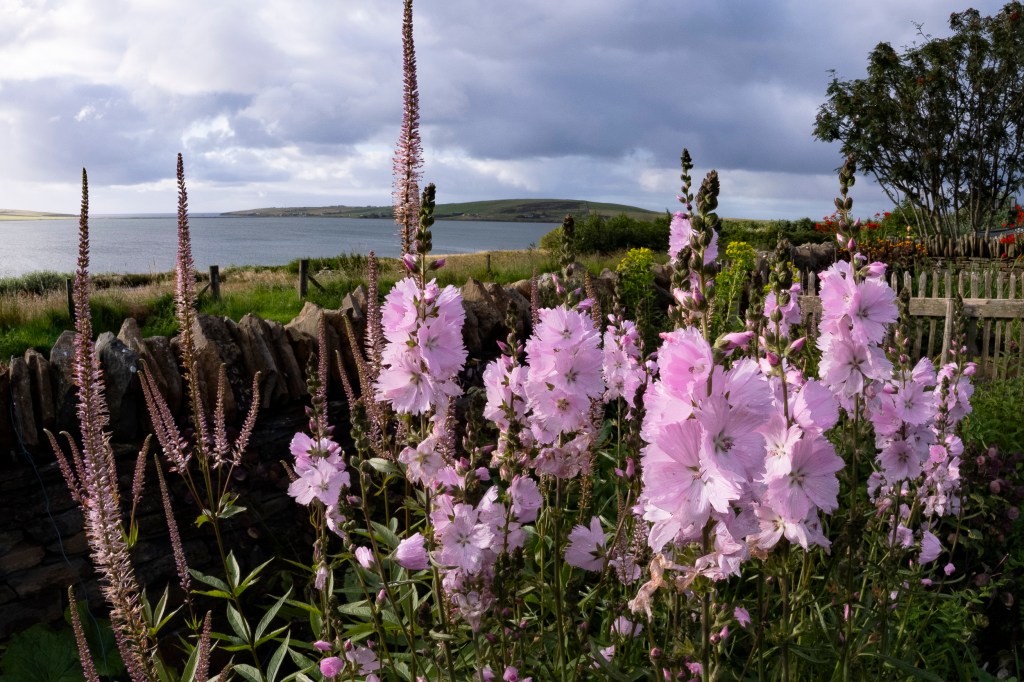
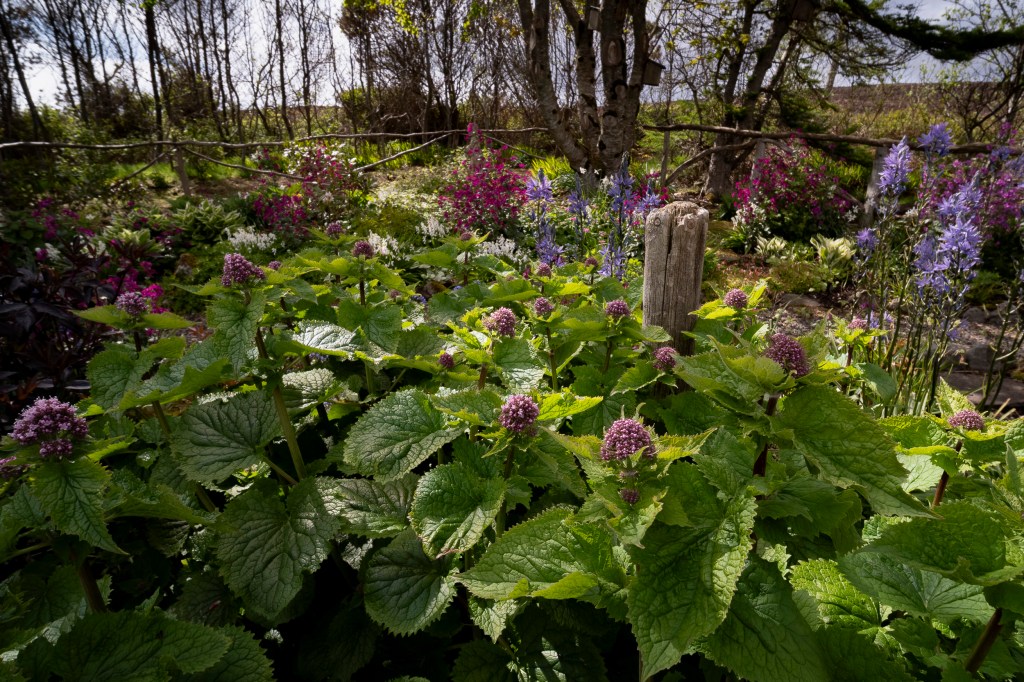
In the garden it seems that new flowers are appearing almost hourly. At this time of year it’s truly hard to keep up. A plant that does really well here is valeriana pyrenaica, the Capons tail grass or Pyrenean valerian, one of those fuss free plants that is happy in sun or shade, either damp or dry. All it needs, because of its height and spread, is a couple of discreet stakes.
Pyrenean valerian.
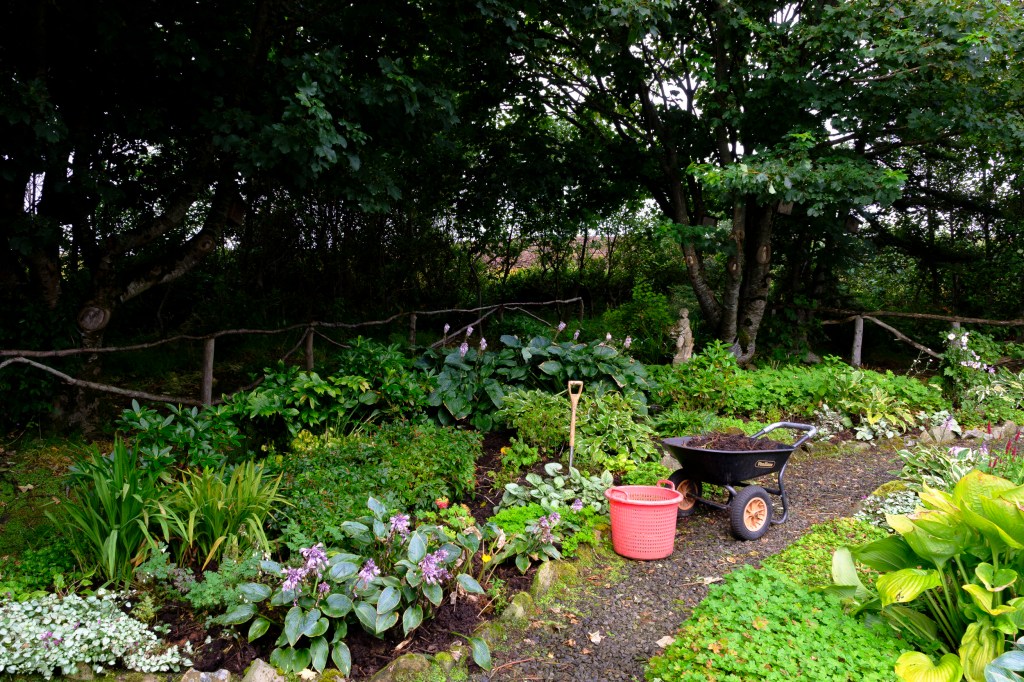
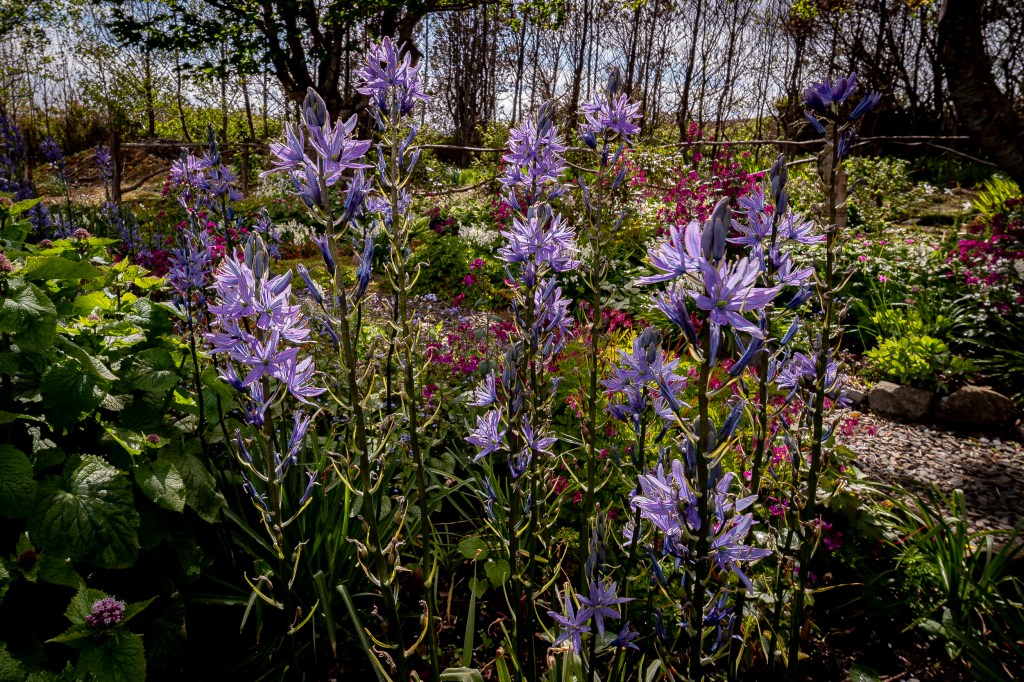
In a shady spot, beneath two sycamores, a valeriana grows alongside spires of blue Cammasia, a member of the asparagus family. Cammasia’s hail from North America and in the wild they’re a native of damp meadows. They need a moist but free draining soil and although they aren’t quite as forgiving of location as the valeriana, they’re still a perfect fit for this neck of the woods. Their flowers are short lived, lasting a week or two at the most and are always worth the wait.
Cammasia.
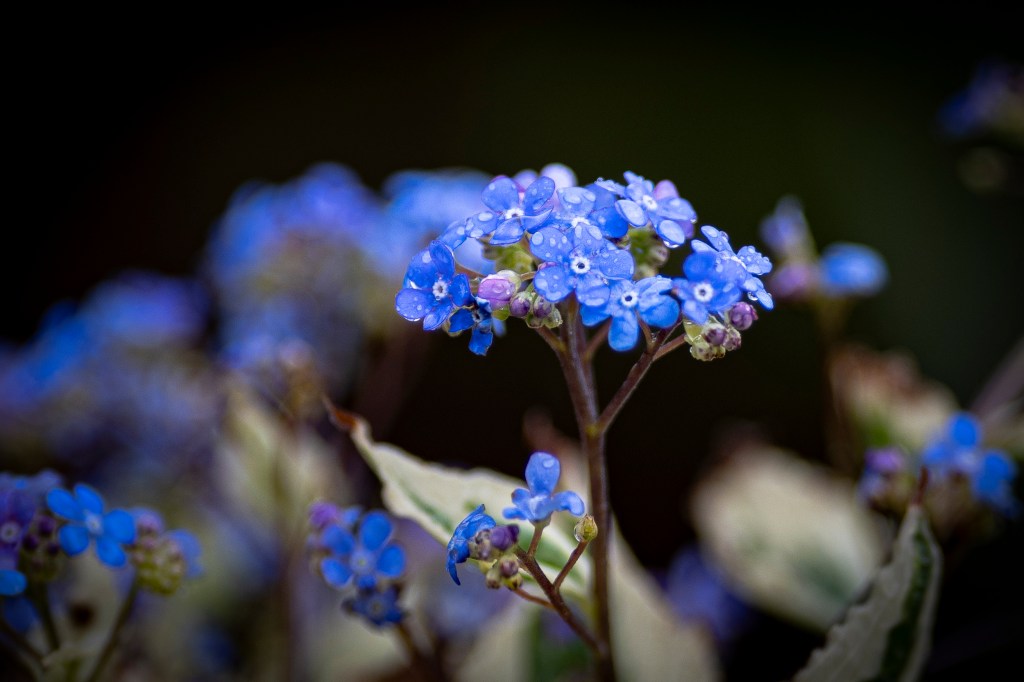
For me, at this time of year blue is a favourite colour, along with the cammasia’s the blues in the garden come mostly from catmints and siberian iris, the latter is yet another damp lover, but there’s also an easily overlooked blue, the forget-me-not like flowers of Brunnera silver heart, a plant that is really grown for its foliage and whose tiny flowers are perhaps a little bit under appreciated.
Silver heart.
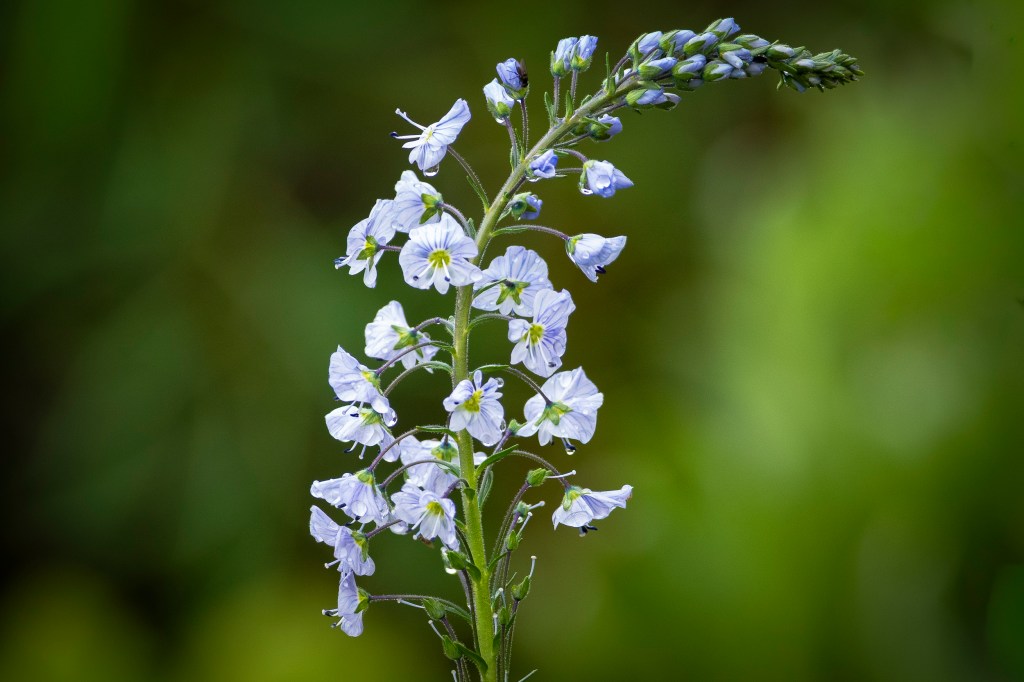
Another blue, that has taken a few years to get established, is veronica gentianoides, the Gentian speedwell. A lover of damp free draining soil, it really should have raced away here but is only now starting thicken and spread. Its spires of pale flowers are the colour of bleached denim, they bow to the rain and are unforgiving of the wind, perhaps Orkney is too harsh for it but now it’s established, it’s definitely a keeper.
Gentian speedwell.
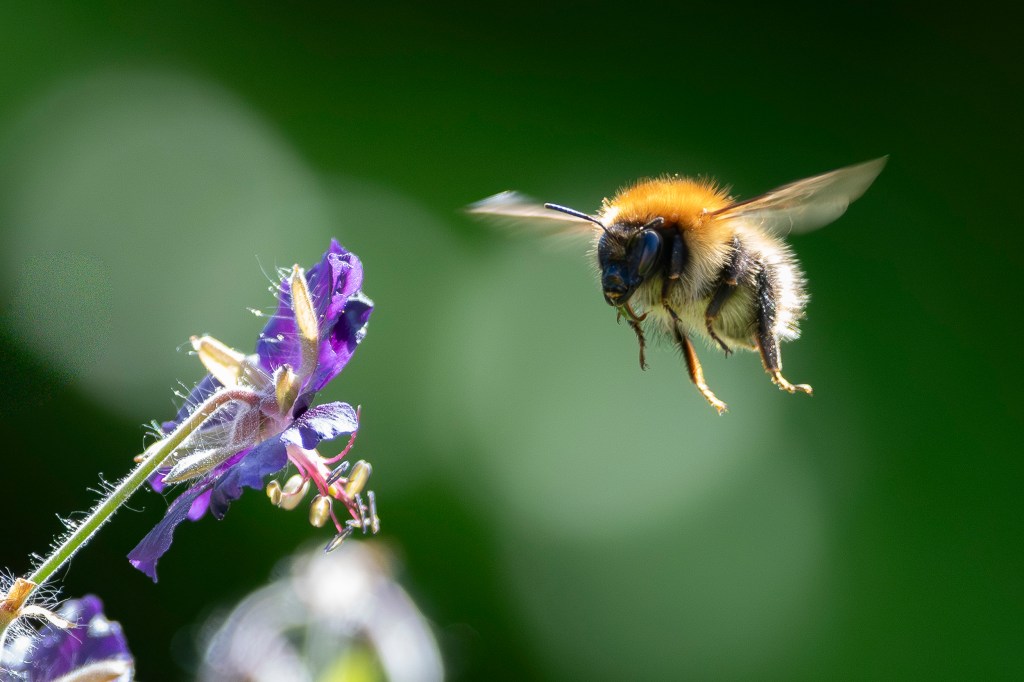
As would be hoped for at this time of year, the garden is abuzz with bees. Of the species we have in Orkney, one of the most seen is the aptly named Common carder, a ginger yellow fur-ball of a bumblebee that nests on the ground amongst thick vegetation. In the wild clovers and vetches are a favourite food source, in the garden, for this week at least, their top of the menu choice is Geranium phaeum.
Common carder.
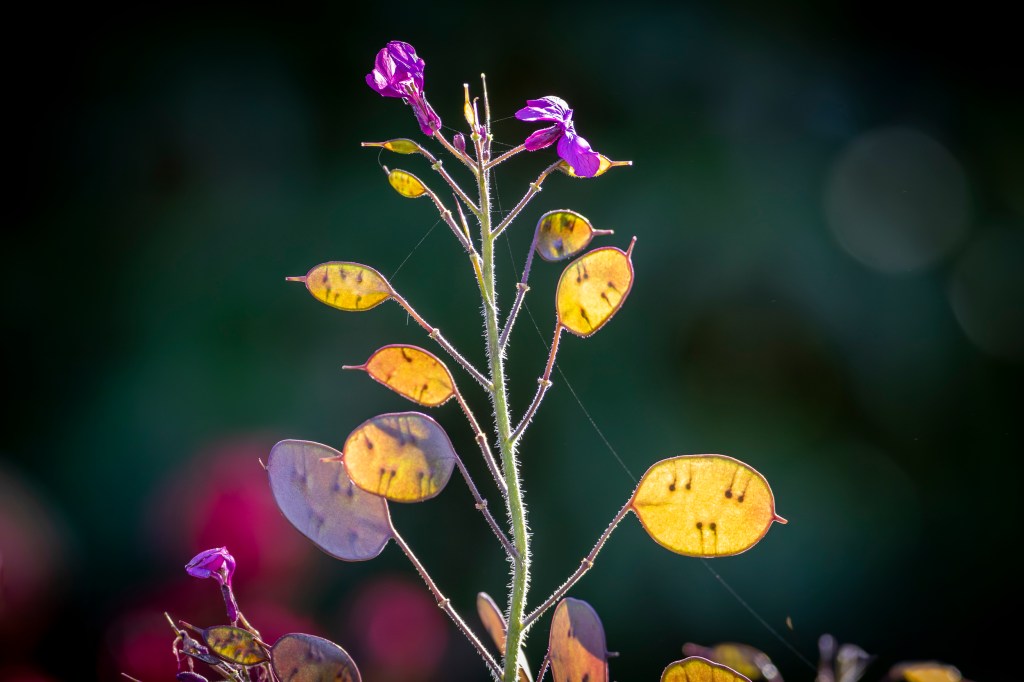
As some plants are flowering other are already starting to fade. The flowers of honesty, at their best a few weeks ago, are already turning to seed. Like their flowers, the seed pods are best when backlit by a low sun, translucent and gold with each seed a tadpole silhouette. By autumn the pods will be silver-white and paper dry, the silver dollars that give the plant its common name.
Honesty.
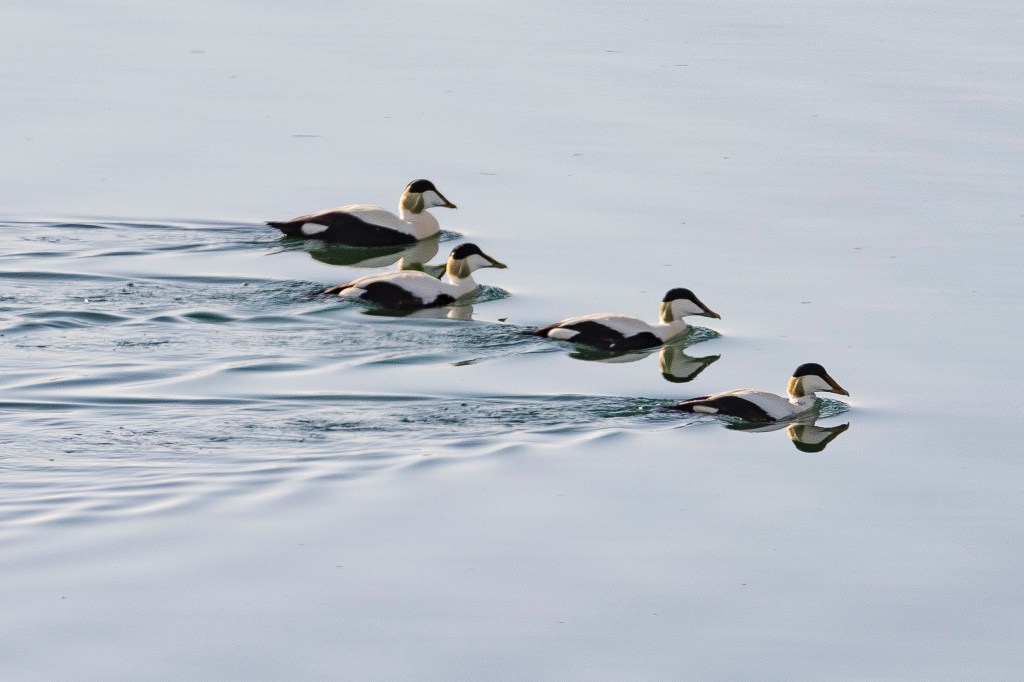
Beyond the garden, out on the bay, small groups of Eider drakes are being seen, a sure sign that females are incubating hidden clutches of eggs. Their job over for the year, the boys leave the girls to it and pass the time motoring around on the water, a month or two ago they’d be driving each other away, fired up with the desire to find a mate, now they’re all bonhomie, past disputes forgotten, at least until next spring.
A boys day out.
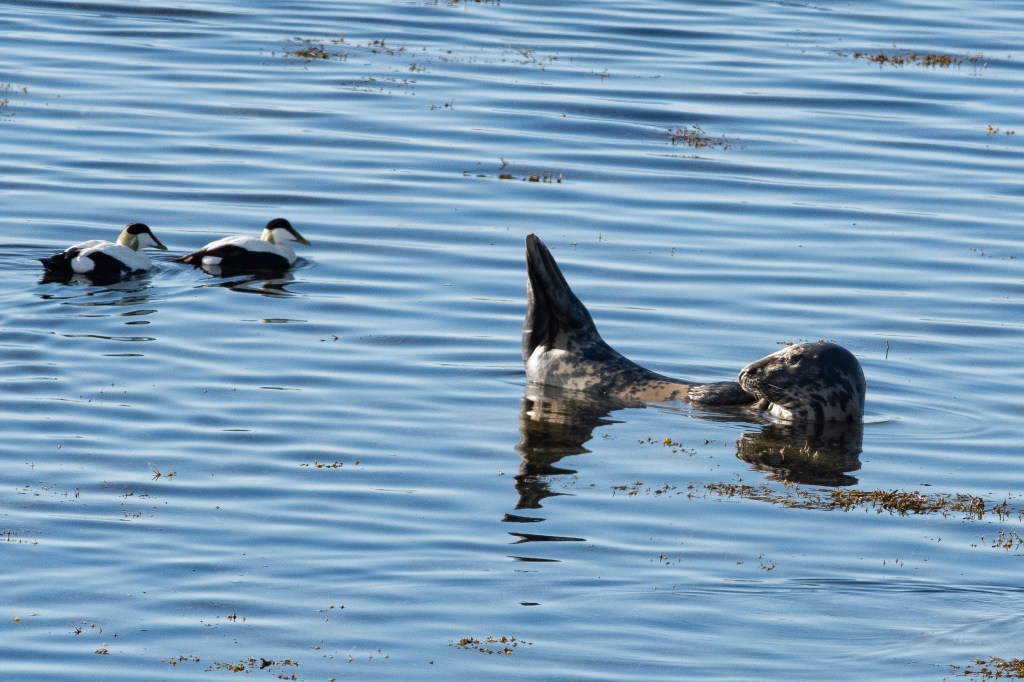
In June, on the shore of the bay, harbour seals will start to pup. Unlike their larger grey seal cousins their pups can swim at a day old, an advantage for colonies that pup on sandbanks, where twice a day the nursery is covered with water. At home they pup at the base of the low cliff that falls away from the meadow. At high tide, when the water laps at the base of the short, but vertical cliff, adults and pups alike will often stay put, bending like bananas, keeping heads and flippers out of the shallow water. They do this to regulate their body temperature – thermoregulation. Until I googled it one day I’d always assumed that they had just got comfy, and being quite laid back animals, really couldn’t be bothered to move, high tide or not.
Thermoregulating – and keeping an eye on the Eiders…
* “Ne’er cast a clout ’till May be out”, slang from my home county of Yorkshire, “Don’t put away your coat before the month of May is over” 🙂
The past few weeks have brought a settling down of the weather. The days are much longer now, the first glow of light arriving in the North-east at well before 5am and at the days end, the last light of the evening lingers in the west beyond 10pm. The first day of (astronomical) summer is more than a month away but for us it feels like summer is already here. With the odd curveball gale excepted there’ll be weeks of long days now, stretching into autumn – sun and rain, flowers and birdsong, well worth winters six long months of wait.
May brought settled days, the hills of Hoy, late evening.
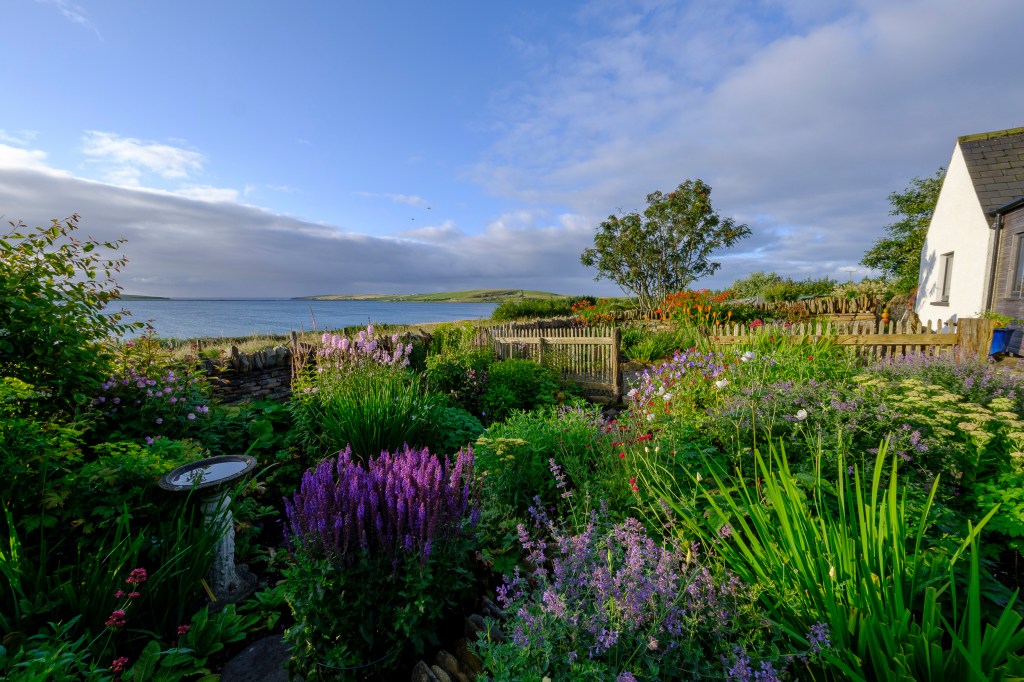
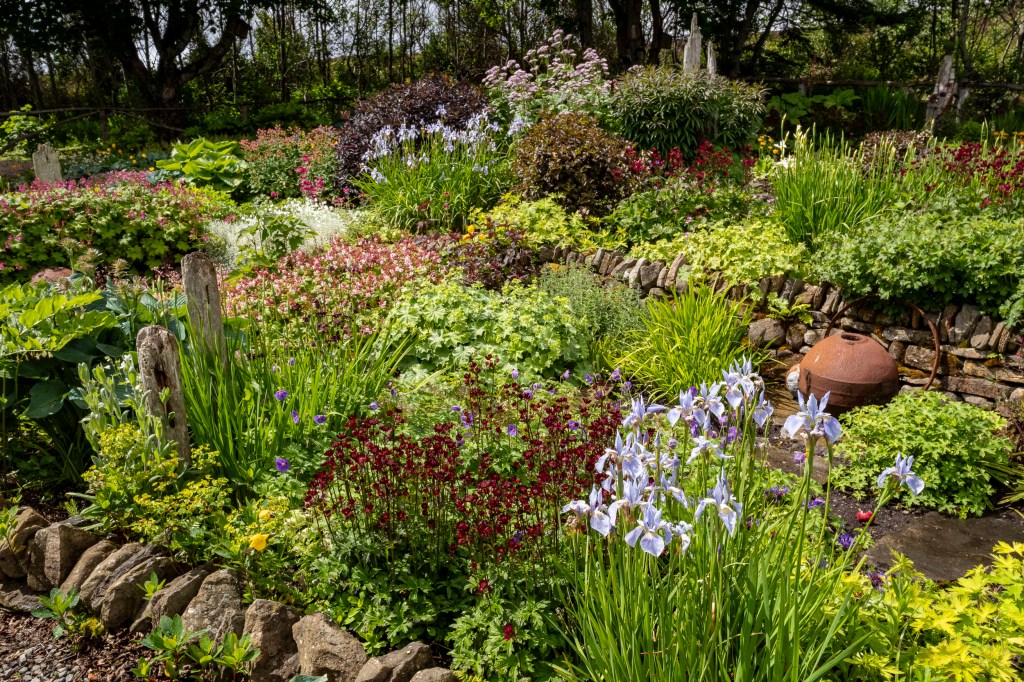
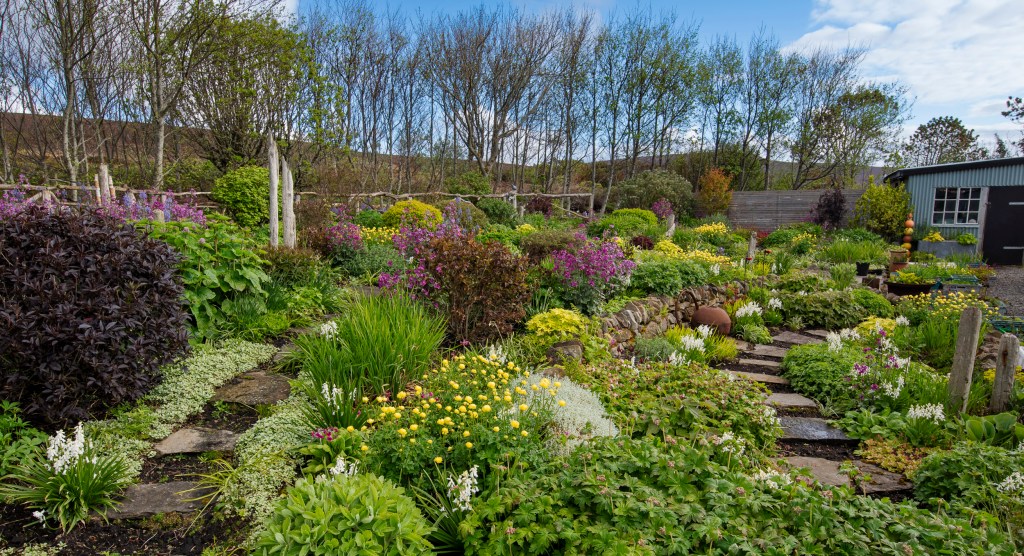
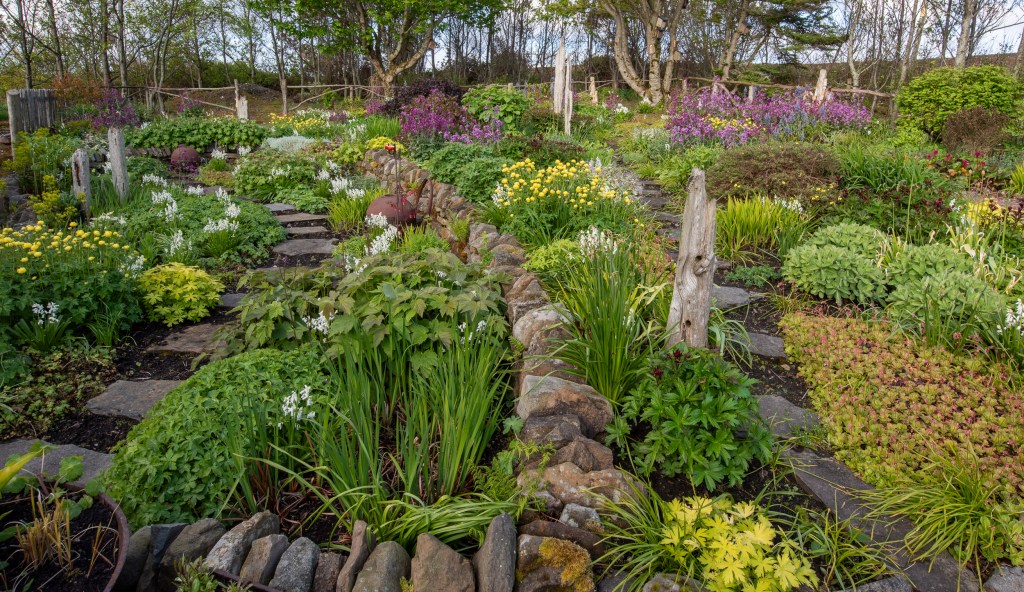
In the garden there has been an explosion of growth, a rapid change, in a few short weeks we’ve gone from spring bulbs and bare earth to lush clumps of greenery, all full of promise for the summer and autumn to come.
A welcome explosion of growth. The back garden, looking North & West.
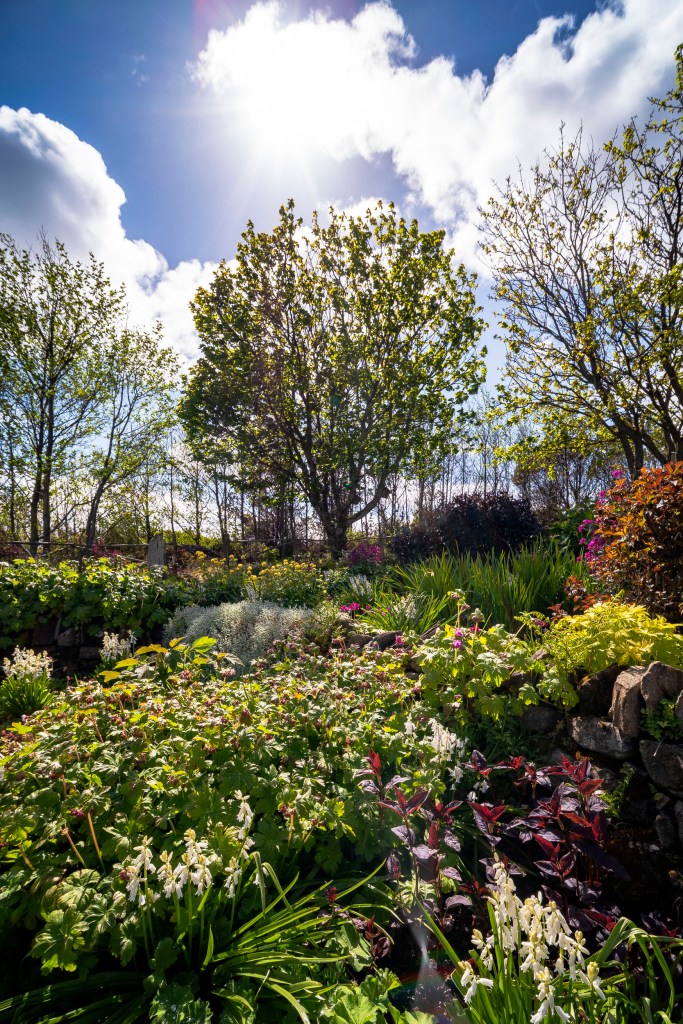
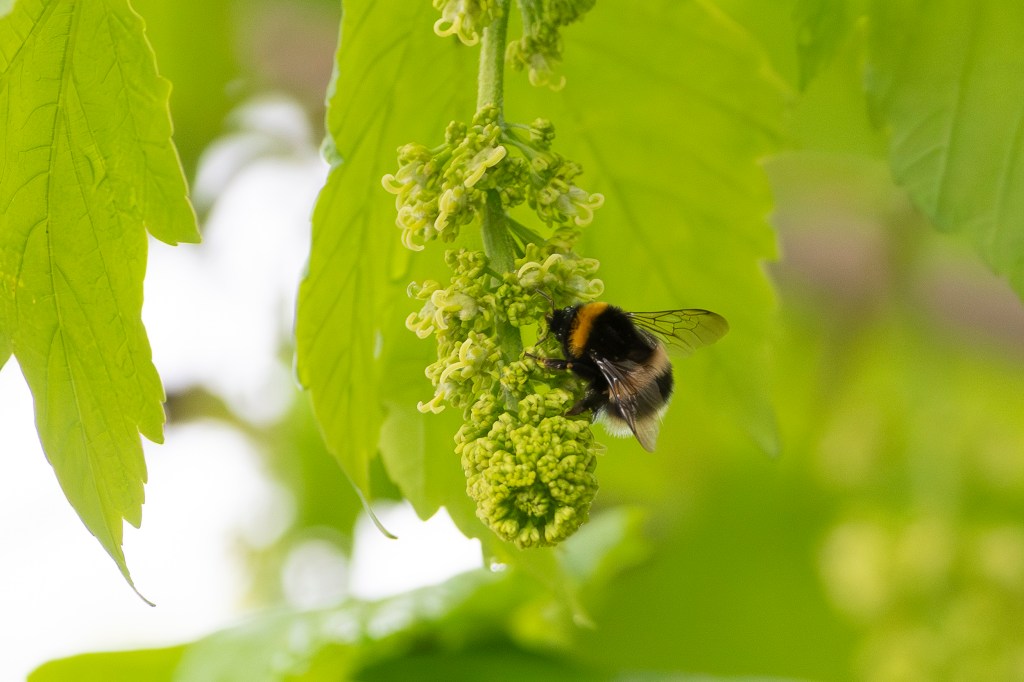
Sycamores are bursting into leaf. This morning brought a gentle rain, I stood for a while beneath the sycamore in the photograph at the top of the page, listening to the hum of bumblebees going about their business in the branches above me. Harvesting nectar from the easily overlooked flowers and, like the human below them, benefiting from the shelter of a newly unfurled pale green umbrella.
Buff-tailed bumblebee and sycamore flowers.
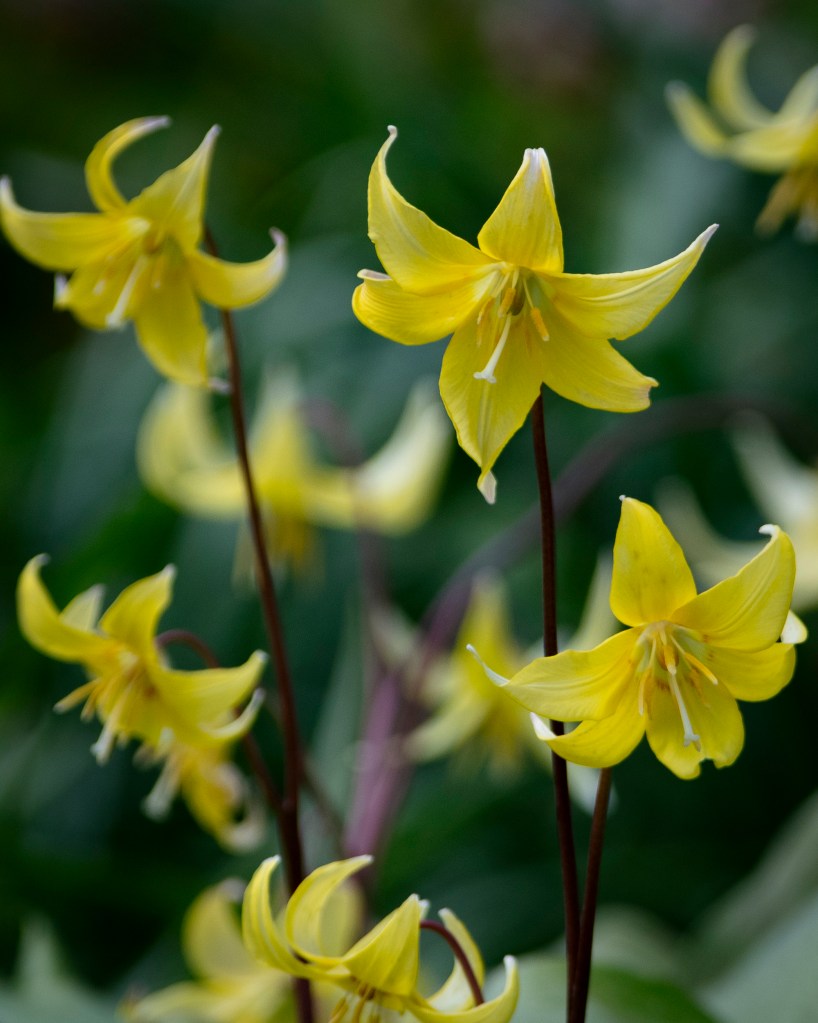
A few years ago, in a border that sits in the the shade of the sycamore (and its same age twin), Jacqui planted a handful of erythronium bulbs. They thrived in our cool, moist and slightly acidic soil and are now dotted here and there beneath the two trees. They get their common name of dogtooth lily from the shape of the bulbs but my favourite, from much colder climes than this, is the glacier lily, one of the first species to flower after snow melt.
Erythronium “pagoda”
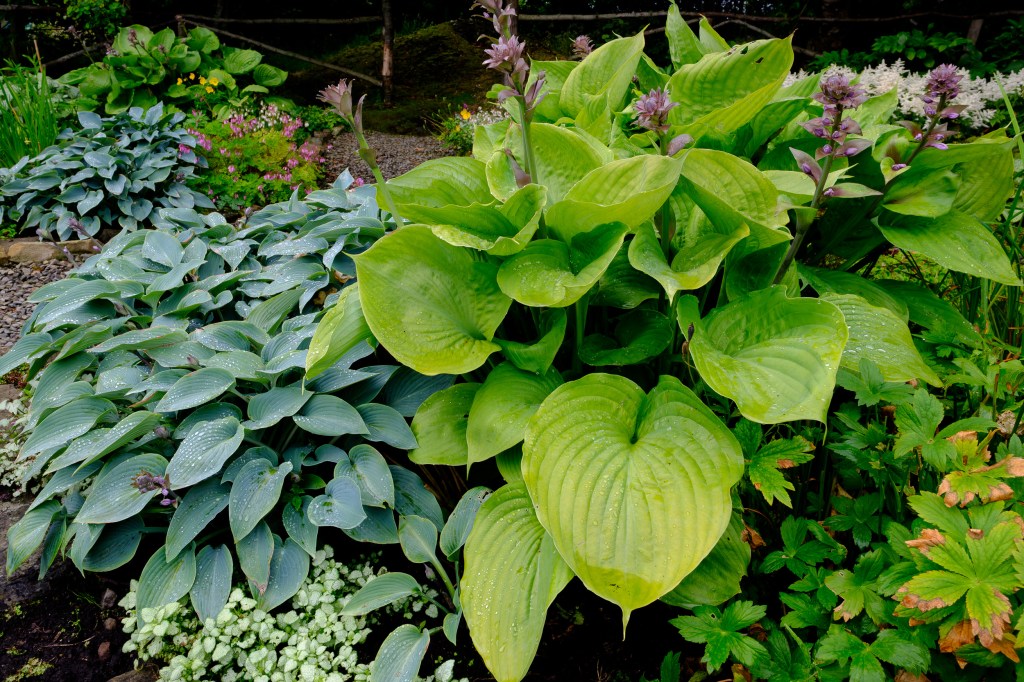
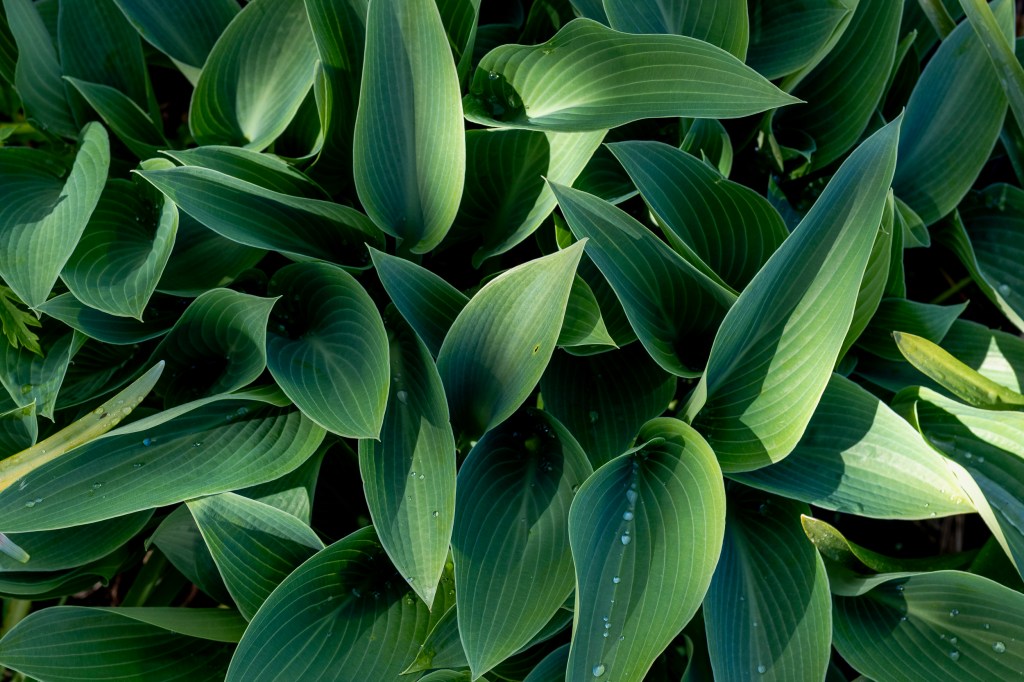
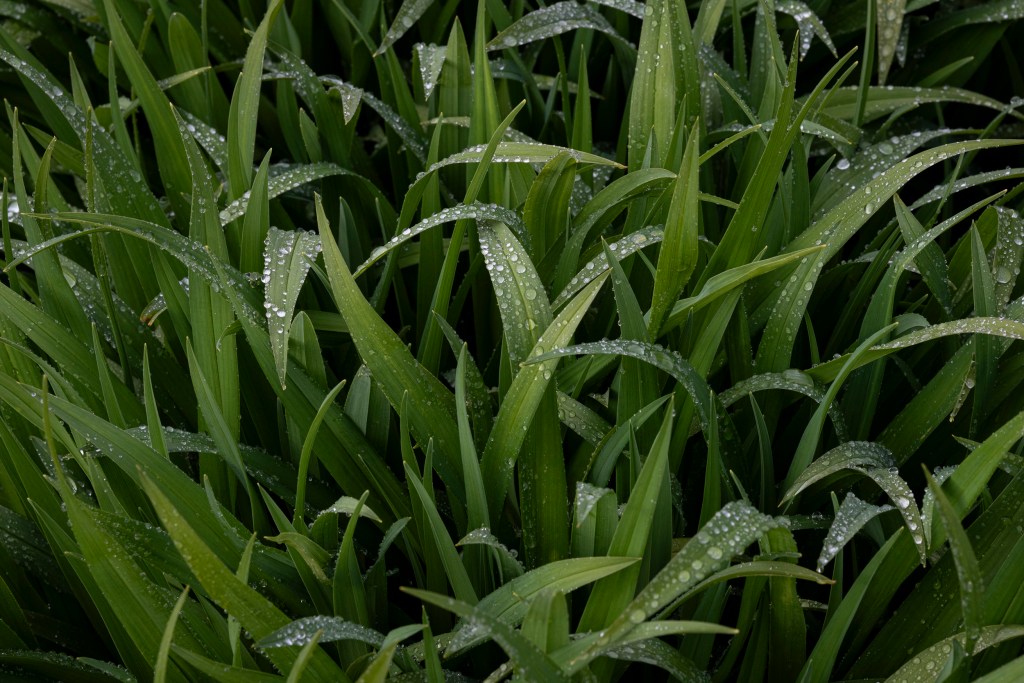
Where flowers have yet to appear, foliage makes up for a lack of zing. The two below are hosta halcyon and hemoracallis stafford. Halcyon, to be fair, doesn’t need flowers, a plant grown for its broad spears of veined blue-green leaves whose flowers are almost an afterthought. Stafford is the opposite, the day lily, grown for its hot, late summer, furnace-red blooms. At this time of year you tend to pass it by, eyes on other things, until a shower of rain gives its foliage sparkle and life.
Halcyon & Stafford.
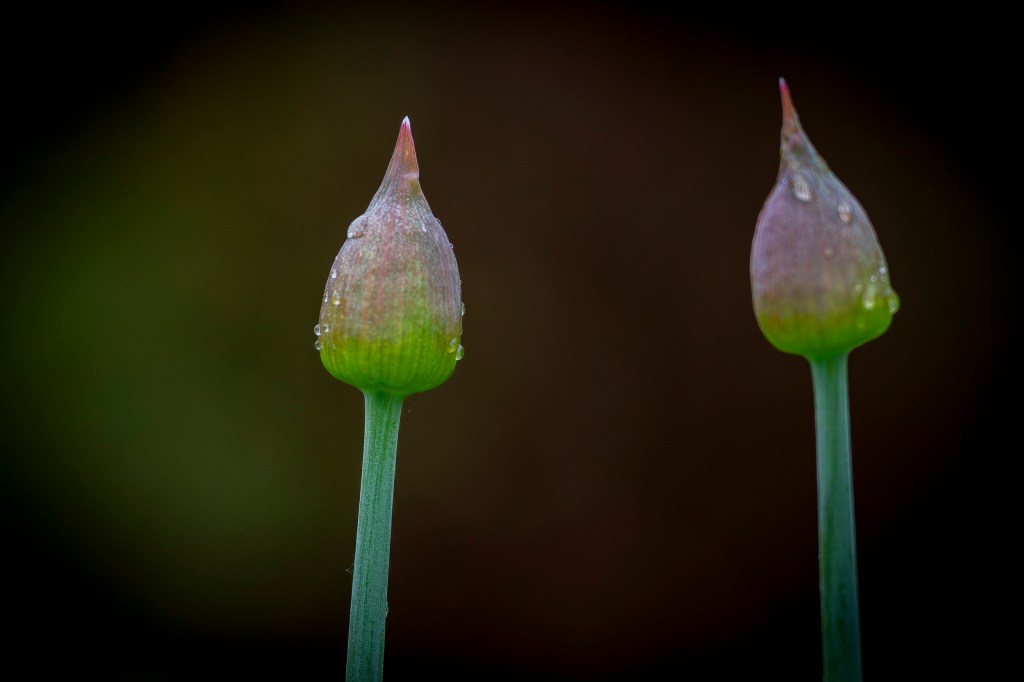
As with the dogtooth lilies, alliums were also introduced a few years ago, lovers of sun rather than the lilies shade. For here they were risky, preferring free draining soil and said to be haters of winter wet. Fingers were crossed and as is often the case, they thrived. They’ll open in a week or two, purple star-burst heads that draw bees like a magnet draws iron, but there’s also beauty in their ripe buds, all soft purples and lime greens, held upright on long, silver-green stems.
Yet to open buds of Allium purple sensation.
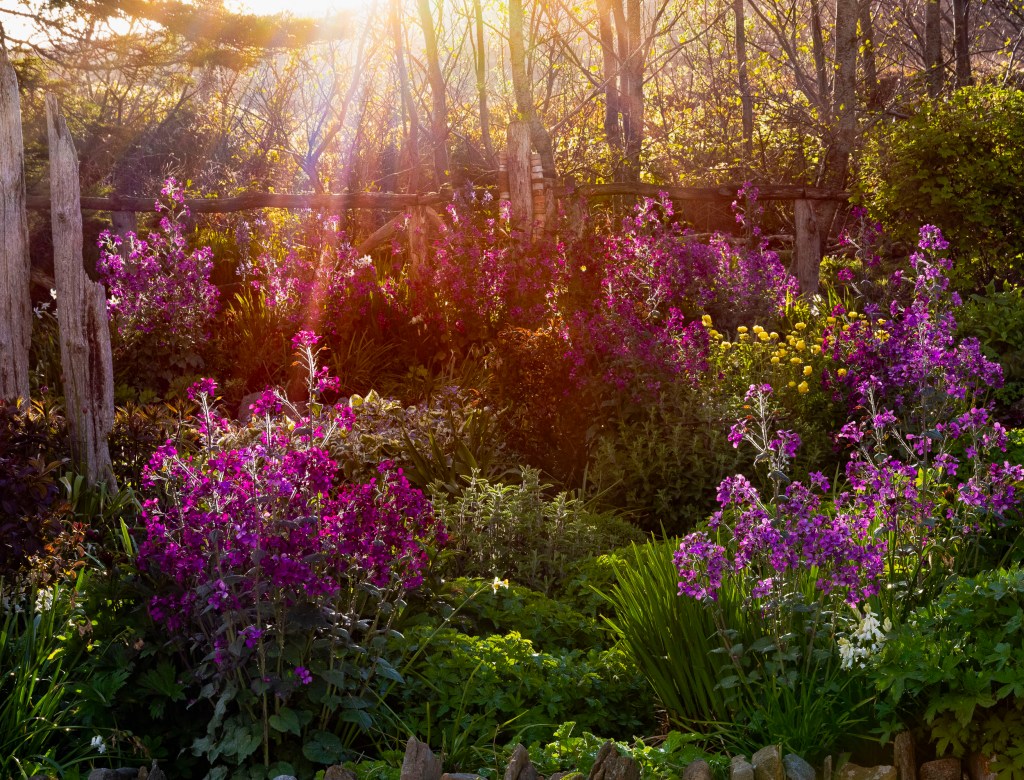
Another fairly recent introduction to the garden is honesty, lunaria annua. Jacqui has a live and let live attitude to self sown plants and now, after a slow start, they pop up anywhere and everywhere, from full sun front gardens to shelter-belt shade. Lunaria comes from lunar, a nod to the moonlike silver seed-heads that will follow the flowers and for here, will last until Autumns winds scatter them far and wide. Annua suggest that they’re an annual, but it depends, in this garden, perhaps because of our short summers, they’re a biennial. They look best in the late evening, backlit by a dipping sun.
Honesty.
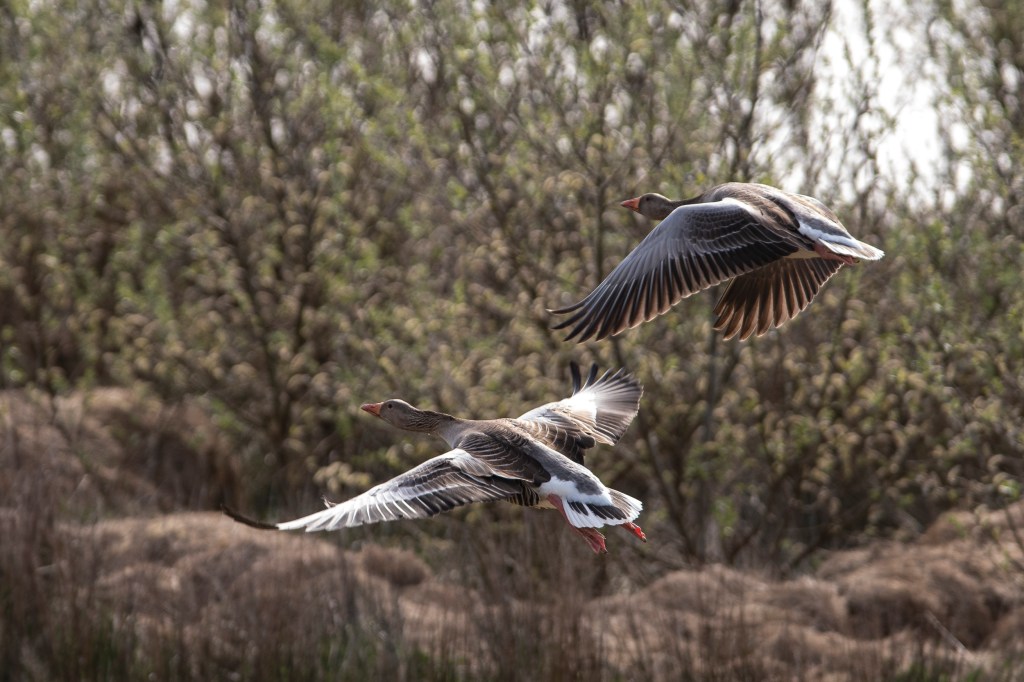
Outwith the garden, a job that finally got done was the mowing of the meadow. I usually mow and clear it in late autumn but had the (not so) bright idea of leaving it until spring so that finches, red-listed Twite in particular, could feed on the seed heads. Good idea for the birds, not so good for the human who cut it. Wet and gale flattened it took twice as long and yielded three times as much “hay” as an autumn cut. Raked into winrows and left to dry, it then had to be quickly and laboriously cleared before new growth started to anchor the winrows to the earth. Plan B is to return to an autumn cut and plant a couple of separate areas for finches. It cheered up the pair of Greylags that nest nearby though, fresh short grass for them to graze. A tiny silver lining 🙂
Greylags lift off from the meadow, in the background are heaps of hay, piled beneath willows to rot, a home for woodmice and bumblebees.
Unlike the garden proper, it will be a few weeks yet before the meadow comes into its own. Each year it goes from strength to strength and it’s genuinely heartwarming to see a carpet of new seedlings, each vying for space with grasses and established perennials, in what a few short years ago was pretty much a soulless and lifeless monoculture. Mid may though is early days for grassland in Orkney, I had a “dodge the rain” walk through it with a camera this afternoon, of all the species present only Water avens, geum rivale, looked to be on the cusp of flowering – a single half open bud with a shy peep of an apricot pink flower.
In Orkney, March ended pretty much as it began, breezy and wet. The early weeks of the month also brought what were probably the last frosts of the winter, just hard enough to sugar-coat the newly emerging leaves of London pride, a plant whose latin name saxifraga urbium, literally translates to stone breaker of the city – one of the first plants to colonise London bomb sites in WW2.
Frosty morning London pride
We had rain and gales aplenty but also some rare bright and beautiful days, blue skies and flat calm. Days that make you forget the wet and the wild and forgive Orkney of the worst that she throws at you. A sure sign of better days to come was the first haar of the year, they form when warming air passes over a cooler sea. A soft low blanket of grey-white that stole the sunrise and hid neighbouring islands from view.
March brought the first haar of the year
In the garden the cupboard is still pretty much bare, snowdrops have faded, tete-a-tete daffodils have taken their place, swapping white bells for citrus yellow trumpets. It will be some weeks yet before the gardens dark earth is lost beneath foliage and flowers. Gardening in Orkney is a slow burn start.
Early days….
In the back garden, the first of our Ribes are in flower. We grow white and pink varieties and of the two, the pink is by far the hardiest, tough enough to grow not just at the edge of the garden but beyond the shelter-belt, on the edge of the moor. The pink was already here, a single overgrown shrub whose offspring, via cuttings, are now dotted wherever there’s a space. A magnet, and a life saver, for early flying bees.
Ribes sanguineum
Beyond the garden, close to the shore, a willow coppice, planted three years ago on a patch of ground that never dries out, has come into its own. Each cutting has reached at least head height, many are ten feet or more, all are adorned with hundreds of catkins, plump and white, as soft as lambs wool. From a distance, especially when backlit by the morning light, they glow like cherry blossom, white against dark, just the look we had hoped for. As March turns to April the catkins, as per the photo at the top of this page, will flower, bursting open, morphing from white to lime green. Next will come silver-grey leaves that in Autumn will fade to a soft orange-yellow. One of those trees that never stops giving.
Salix hookeriana, the Coastal willow
As the willows have grown and thickened, birds have been drawn to them, long-beaked woodcock lurk beneath them, hiding amongst leaf litter and sedge, coming out at night to probe turf in the meadow, leaving behind the tell-tale daylight sign of ground dotted with hundreds of holes. This year a pair of Dunnocks have made the coppice their home. They’re hard to spot as they flit from low branch to low branch but the male, as I witnessed one morning last week, will occasionally rise to a loftier perch and sing a claim to his territory.
A Dunnock sings of Spring
When we’re gifted flat calm days, one of my favourite things is to walk to the top of the low cliff beyond the willows, to a vantage point where flat ground falls quickly away to a beach of sea worn stone. A hidden spot, thick with ankle-snagging bramble and wild rose. The best time is just after sunrise, as the birds begin to stir for the day and the bay, untroubled by a breeze, is as still as a pool of mercury. Patrolling Fulmars, who nest on the low cliff, fly water-skimming figures of eight, occasionally cutting the bays surface with the lightest touch of a wing tip.
A fulmar skims the bay.
In March I managed a half dozen mornings, a clear and flat calm hour or two where, as the sun climbed higher, the warmth on your face rose as if controlled by a dial. There’s no real aim but to just watch and listen, to see the day come to life. Shore birds come and go, bright-billed oystercatchers and diminutive redshanks dash past, following the tides edge at zero feet. Curlews rise from a shore of sandstone and bladderwrack, complaining loudly of your presence.
Curlews rise from the shore.
Out on the bay, there’s a trio of Long-tailed ducks, a male and a female followed by another male – tail end Charlie. He’s tagging along, hoping she may elope with him. Soon, elopement or not, all three will leave to spend the summer in the high Arctic.
Three’s a crowd…
As the day wakes the ducks and the waders come and go, but the one abiding thing is a bob of Harbour seals. There are around twenty in total, a number that give or take one or two, has been pretty much constant in the seven years that we have lived on this side of the bay. Perhaps it’s the number that this small body of water can comfortably sustain. Most days they’re either hauled out on the rocks, taking a siesta, or out swimming in the shallows but occasionally, when the tide is neither ebbing nor flowing, you’ll catch one bottling, sleeping upright in the water, just chilling, at peace with the world.
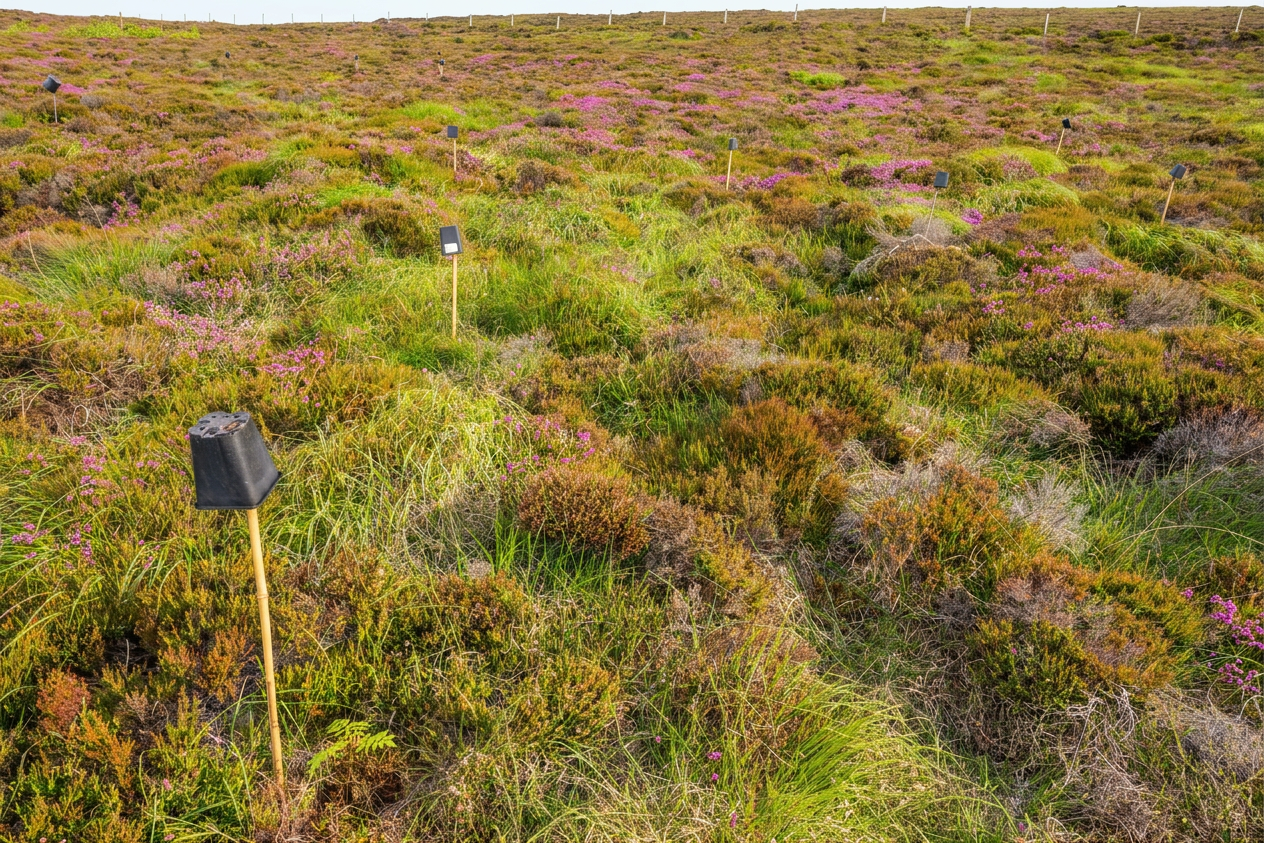
For the past few weeks, from the moor beyond the garden, we’ve occasionally heard the call of Red grouse. Often described as go-back-go-back, for me at least, it’s more guttural; Ko-kerr-ko-kererrrrr. However the ear interprets it, it’s a sound of Spring. We first heard them in late February, my boots were already laced, a walk on the shores of South Walls was planned, a driftwood hunt. The grouse sang a siren song and off I went, driftwood plans forgotten, through the back of the garden and out onto the moor. They were once shot for sport here, driven by beaters towards lines of men and guns hidden in butts, half-sunken hides built of stone or turf. There’s what’s left of a butt on the patch of moor that came with the house, stone built and circular, set waist deep in the peat. One fine day, when I have a suitable sapling, I’ll plant a Rowan in its shelter.
What remains of a grouse butt.
The other method of grouse shooting is walking up, a man with a dog, usually a Pointer or a Setter, doing what it says on the tin, walking the moor, gun at the ready, bagging the grouse as the dog flushes them out. I did the same, with a camera instead of a gun and no dog for company. The grouse are easy to hear, hard to spot and even harder to photograph.
Spot the grouse…
February rains have made the ground spongy and sodden, walking uphill from the garden is akin to walking on a trampoline that has been covered in treacle. As the ground levelled I followed the boundary fence, heading for a makeshift stile. A covey of nine birds bursts from the heather, a blur of wing and bodies. I swung through them as you would with a shotgun, catching five of the nine as they topped the fence.
The birds were lost to sight over a brow but I heard them land. As they settle they have a different call, a low and gargled aaaa-kaa-kaa. Once over the makeshift stile, (two fence stabs and a horizontal piece of wood: imagine a one rung stepladder) you’re into the peat cuts, they’re silent now but would once have rung with voices as families cut fuel for their hearths. I’d marked where the birds had landed but they had already moved on, a quick glimpse of three birds on the edge of a cut and they were gone, disappearing into the heather. Fast on foot as well as wing.
Beyond the cuts the ground rises again, there’s another fence, rising and falling with the contours, running arrow straight across the moor, a testament to the skill of the man or men who put it up. It terminates in a valley, a mile or two further on, on the shore of the islands reservoir. It’s a few years since I’ve seen any livestock up here, changes in farming practice mean the fence currently keeps neither nothing in nor nothing out. From the base of the fence three grouse burst from the heather, chestnut bodies flashing silver-white underwings. They glide away, heading downhill, back to the cuts.
As you climb higher the view opens up. A fence post becomes a handy tripod, with camera balanced and fingers crossed that it wouldn’t fall off, I tripped the self timer and walked into the frame. To my right there’s Hoys southerly tip, the headland of Brims, with the open scar of its now disused quarry. The source of the stone that built the ex croft house that we live in, ditto many of the other homes that dot this landscape. Above Brims, beyond the dark blue waters of the Pentland Firth, there’s a faint grey smudge, the coast of Scotland, the county of Caithness. To my left lies the island of South Walls and centre frame there’s the thin black line of the Ayre, the narrow causeway that ties each island to the other.
As the ground rises again more grouse are seen, a female appears, a moorfowl, she blends perfectly with the heathers and grasses. In April or early May, she’ll lay a single clutch of eggs in a nest so well hidden amongst the heathers, that only if you almost step on her, will she reveal its location. There’ll be perhaps 10 or more eggs, each speckled with blacks and red-browns, the colours of her plumage.
Moorfowl
Her mate, the moorcock, appeared a few moments later, stocky and alert, darker in plumage with lipstick-red eyebrows. A bird whose image has adorned thousands of bottles of Scottish Whisky.
Moorcock
Red grouse are unique to Britain and Ireland. Along with the Mountain Hare and Hen Harrier for me they’re an iconic species of open moorland. Their Latin name is Lagopus scotica, the first, lago-pus means hare-foot, a reference to feathered feet that give them traction when snow is on the ground, the latter means of Scotland, a bit of a misnomer as along with the Emerald Isle, they’re also seen from the moors of Cornwall through to the Northern counties of England. With dusk approaching I walked the same route home, the last frame of the day was taken back in the peat cuts. A pair of birds, probably yearlings, caught by the last light of the day.
In Orkney, the last weeks of January, and the first days of February, were wild and wet. In mid January the wind set in from the East and never veered or paused, bringing Groundhog days of wet and gales that varied only in the intensity of the rain or the strength of the wind.
A rare break in the clouds, late afternoon, near Isbister.
A booked trip to mainland for a supermarket shop came with the warning that once on the boat your car might not get off, so bad was the swell and the risk of docking back on Hoy. The passenger only boat that serves the far end of the island, and runs from Moaness to the island of Graemsay and then on to Stromness, fared much worse. With a low lying pier and an easterly swell the last count for cancellations was something like 49 in the space of a few weeks.
The (passenger only) boat to Graemsay & Stromness.
The weather broke, thankfully, on the 10th of this month. A couple of welcome settled days of blue-sky sunshine, followed since by our usual mixed bag, bright days and grey days, and just the once, while I was up on the moors, a day broken now and then by sheets of gale-driven hail, pellets of ice that stung like pinpricks. As I turned my back to a curtain of hail, a Golden plover came up through the valley, gold against white, a summer breeder here and a sure sign, that despite the hail and the bitter northerly, Spring is spinning towards us.
Plover & hail, above Heldale
When I’m walking on the moors, the animal I can’t resist photographing is the Mountain hare. I saw a few that day, snow is rare here and for once, with hail on the ground, the hares, still dressed in their white winter coats, looked a perfect fit for their environment.
Round peg, round hole.
On the the way down from the moor I photographed a distant South Walls landscape, a patchwork of stone dykes and small fields, lit by a burst of late afternoon sun. Sheep were being folded on neeps, sown in late Spring for the purpose of bringing ewes through a long and cold winter. The ewes are moved every few days onto a piece of new ground, the precious muck that they leave behind enriches and fertilises the soil. Next year, as part of a traditional rotation, the field will be barley, or pasture.
South walls landscape
Not far from the neeps and sheep, there’s a field of oat stubble, with the islands wet ground it will stay unploughed until late spring, indeed stubble here sometimes doesn’t get ploughed at all, cereals are often under-sown with grass and simply green to a ley the following year. The field is a magnet for many species of bird, from finches through to greylags. It’s a favourite spot for long-beaked waders, Curlews and Oystercatchers and diminutive Redshanks, whose bright legs that give them their name, are barely long enough to raise them above the stubble.
RedshankCurlew.
A flock, or clattering, of Jackdaws are there most days, feeding amongst hollow stems scissored off by the harvester. Heads down with beaks in the soil the birds form a carpet, a loose and slow moving drift of feathery grey-black, seeking seeds and unlucky invertebrates. They say if you watch nature you’ll learn something new everyday, that days lesson, when I watched them lift off, was just how bright and jade green their eyes are.
A clattering of bright eyed Jackdaws
Another sign of an impending turn of season, is that greylags are once again being seen in pairs. At home, for the past two years, a pair have nested in a rough corner of sedge and briar, close to a pond in the meadow and barely a stones throw from the shore. Sure enough, last week, a pair were on the pond. A few weeks from now the female will lay her eggs and the male, ever wary, will stretch his neck and honk and complain as you go about your business in the garden.
My beady eye…
In the garden itself, the first snowdrops have opened, tete-a-tete daffodils are pushing through the damp earth. Willow buds are swelling, ready for a catkin explosion. It’s early days but the garden is slowly and surely awakening from its slumber.
Harbingers of Spring
A robin is singing daily in an edge of garden larch, reclaiming his territory. House sparrows are checking out des-res nest boxes. Up on the moor, albeit on a cold and wet day, a wren paused now and then, from a spider hunt in the heather, to rattle out his shrill staccato song of Spring from a stock-fence perch.
At home, in winter, Grey herons are a common sight on the shoreline of the bay. On good days they stand tall, long necked and elegant, statue-still. On bad days, like today, when the winds are gale force and the rain horizontal, they cluster, hunched and wet, in small groups in a sheltered corner, close to a burn that rushes peat-brown water from moor to sea.
Grey heron over North bay.
On a clear and bright December afternoon, I watched a heron hunting close to the Ayre, a causeway that links Hoy to the island of South Walls. A narrow strip of tarmac that separates bay and open sea. Up here herons are wary of people, more often than not taking to the wing at the mere sight of a distant human. The bird watched me warily, as I quietly approached, through a bright yellow eye of jaundiced frogspawn.
I expected him or her to lift off, accompanied by a vocal and complaining craak, heading for pastures new. The bird though stayed put, knee deep in the shallows, amongst drifting floats of air-filled bladderwrack. I sat down, the bird stood motionless, eyes off me and back in the zone, looking forward and down, studying the water with a hunters intent. Eventually patience, for both bird and photographer, paid off, the heron struck, a fluid snake-like strike with a dagger of a bill. Barely registering a splash on the surface of the bay.
Its prize in the end, was an unlucky Blenny, a small bull-headed fish whose pop-out eyes look far too big for its body. Common in rock pools and shallows, they’re seen throughout the UK.
I stood up, pushing my luck and edging closer. The bird took flight. In the air they’re all extremities, all wings and neck and legs. A jumble of oversize parts, out of scale for the body they’re attached to. A heron is around the same size as a Whooper swan, an adult whooper weighs in at around 10kg, a grey heron, despite its similar size, is, at less than 2kg, a featherweight in comparison. They were once served up in medieval banquets, if you were hungry and fond of heron, you wouldn’t want to be last in line in the serving queue.
The bird flapped lazily away, landing a hundred yards or so distant. The light was fading and he or she picked a lucky photo-friendly spot. The only piece of shore still lit by the last, dying rays, of a midwinter sun.
Above Heldale, early October, a Mountain hare in its summer coat.
Over the past couple of months, on moor and shore, we’ve watched two of the islands mammals, Mountain hares and the pups of Grey seals, change their coats. For both it’s a means of survival, for the Hares supposed winter camouflage, for the Seals a chance of independence, to leave the shores that have bound them since birth.
Grey seal pup, Birsi geo.
In Orkney, Mountain hares are found only on Hoy, and were likely introduced by the Lairds for sport. They’re a creature of open moors and low hills, places where trees lost in Neolithic times will seemingly never regain a foothold. They share their open and sometimes bleak habitat with many others, from their nemesis, the White-tailed eagle, through to low flying moths and butterflies, that seemingly live a life governed solely by the direction of the winds.
Early November, near Binga fea.
They start to shed their blue-brown summer coats in October, a process that sees them, as per the photo above, at first turn piebald, and then, to a not quite fresh from the wash, white. The change is genetic, wired into their DNA and in a warming climate, a serious disadvantage. Despite the dump of post New Year snow that we have just had, in winter the moors and hills here are, for the most part, soft shades of russets and browns. As can be seen by the photograph, piebald is a good early Winter camouflage, after that, as the moors fade and their coats whiten, they literally do stand out like the proverbial sore thumb.
December, a sore thumb in the landscape,
The hares though have a survival trick. Whatever the time of year, with the wind behind you they’re nigh on impossible to stalk, but put the wind on your face and walk quietly towards likely dips and hollows and it’s possible to get within a few feet of a hare sat tight in a form. In summer, if the hares nerve breaks, it will run, covering a hundred metres or so before pausing to look back, its warm weather coat blending perfectly with the heathers and grasses. In winter though I’ve seen a different trick, a quick leap to one side and, as if through an invisible portal, they’re gone. A closer inspection will show not some Leporid sorcery, but a short burrow, curtained by grasses and heathers, that at a distance is almost invisible to the eye. A mere foot or two long but enough to give safety from a swooping Eagle (or a nosy human with a camera).
Now you see me…Now you don’t…
Grey seal pups are born from mid October through November here. The Geo’s of South Walls, with their beaches of sea-smoothed cobbles, are a favourite spot for mothers to haul out and give birth to creamy-white pups. The pups for their first month of life are shore-bound, covered in Lanugo, a sheepskin-like coat of white fur that keeps them warm but not truly waterproof. Every year some are lost when a storm driven tide pulls them to an early death. Many more survive though and it’s fair to say that those puppy dog eyes make it impossible to pass by without raising a camera to your eye. To avoid disturbance a long lens, in this case 600mm, is essential.
A few days old.Aged four or five weeks.
At a month or so old they shed their fur and develop their adult waterproof skin, turning from white to shades of grey, blue and black. Beneath the skin, after weeks gorging on their mothers high fat milk, lies a thick layer of insulating blubber, they’re ready at last to answer the call of the sea. A danger with this rapid growth is entanglement, twice we’ve seen half grown seals with an ever tightening garrotte around their necks, one seal got lucky, after a bit of a wrestle we cut the net from its neck, the other not so much, seen in the water, out of reach. An unwritten beach-combing rule is to drag rope and old net out of the tides way, stick a rock on it and let the grass grow through it.
Sea worthy
My favourite shot is the one below, a well grown pup catching the last rays of a winter sun. Swim, feed, sleep and repeat, a tough life 🙂